Myths About Self-Authorship in Student Affairs

I thought I would blog about self-authorship to help clear up some misunderstandings I’ve personally experienced throughout my time in the field.  Self-authorship is something that I research and study, so I try to notice when it is misunderstood.  I thought an easy way to clear it up would be to share four main myths I’ve heard about the concept.

Myth #1: Self-authorship is simply saying “I’m making this decision myself, so therefore, I’m self-authored.”  For example, “I’m sorry Sarah, I decided to self-author my homework and not do it.”

Myth #2: Self-authorship is only for White people.

Myth #3: Self-authorship is participating in self-reflection.

Myth #4: Self-authorship doesn’t allow you to build relationships with others.

So let’s start with some basics.  Self-authorship is a way of making meaning. A self-authored individual makes meaning of their experiences by determining their own values and beliefs while seeing others’ views as important and worth considering (Garvey Berger, 2011). This addresses myth #1 and myth #4.

Another way of looking at self-authorship is that it is a way of making meaning in which individuals possess the ability to face economic complexity, balance multiple roles, interact effectively with a diverse world, and responsibly confront social issues (Baxter Magolda, 2001).  Having the ability to face each of these issues most certainly is necessary for those working within the field of student affairs, as the problems of our field seem to only be increasing in complexity within each of these areas and more.

A self-authored way of thinking isn’t just about thinking about oneself (myth #1), it actually requires one to become closer to others in order to see their view point. Kegan (1994) discusses this by stating,

“When we see that we are not made up by the other’s experience, we then have the capacity not to take responsibility for what is now genuinely and for the first time not ours. And as a result, we can get just as close to the other’s experience (even the other’s experience of how disappointing, enraging, or disapprovable we are!) without any need to react defensively to it or be guiltily compliant with it” (p. 127). 

Imagine if in student affairs, we could interact with each of our colleagues and others at work having this capacity!

Myth #2 is addressed through research that is being conducted worldwide, as documented in Development and Assessment of Self-Authorship: Exploring the Concept Across Cultures (Baxter Magolda, Creamer, & Meszaros, 2010).  Book+Self+AuthorshipWithin the book, there are chapters on Bedouins and Jews in Israel, Latino ethnic identity, and other groups of people; and those aren’t the only studies occurring.  In fact, if you explore almost all development theories, you will find a common ebb and flow to them if you explore “how” development is occurring, not just “what” is being developed. Like almost all development theories, those who experience the most dissonance are the most likely to develop toward it.

Myth #3 is not what self-authorship is, but is instead a way to promote the development of self-authorship.  Again, given the issues facing our field, I believe we want to promote it. We need people who are conscious of themselves and the systems that are at work in student affairs and higher education, so that they can make responsible decisions for the good of the community by recognizing what is their responsibility and what is not in an ever increasingly complex world.  Other processes that promote self-authorship include:

  • “an ingenious blend of support and challenge” (Kegan, 1994, p. 42)

  • “listening without judgment, working on the process of one’s own way of making meaning, and intentionality” (Garvey Berger, 2012)

  • “identify diverse experiences, epistemological reflection, and participation as methods” (Mezirow, 2000, 2009; Zull, 2002)

It is also important to remember that being self-authored in how one makes meaning isn’t the end goal–there is more to our development and it continues to be explored.  Being self-authored in how one makes meaning allows individuals to move beyond solely depending on the external environment to tell them who they are and what actions they should take. Being able to think for one’s self is a way of thinking that employers seek in employees (Kerry, 2013, para 6; Krislov and Volk, 2014, para 13). However, my own research on new professionals indicates that those entering the field of student affairs aren’t yet self-authored (Schoper, 2011) (sorry if I’m bursting that bubble), so how can we expect them to assist in fully developing undergraduate students to meet the qualifications that employers seek?  I don’t believe it is simply the fault or full responsibility of student affairs preparation programs. It seems as though the field of student affairs may still be, “overly focused on outcomes and not process” (Jones, 2006, p. 4).

To me, it is the collective responsibility of all of us to promote continued development, not just in our students, but in ourselves. If for no other reason then it enables us to approach the problems we are facing with a different mindset.
Einstein


Visiting My Relaxing Place

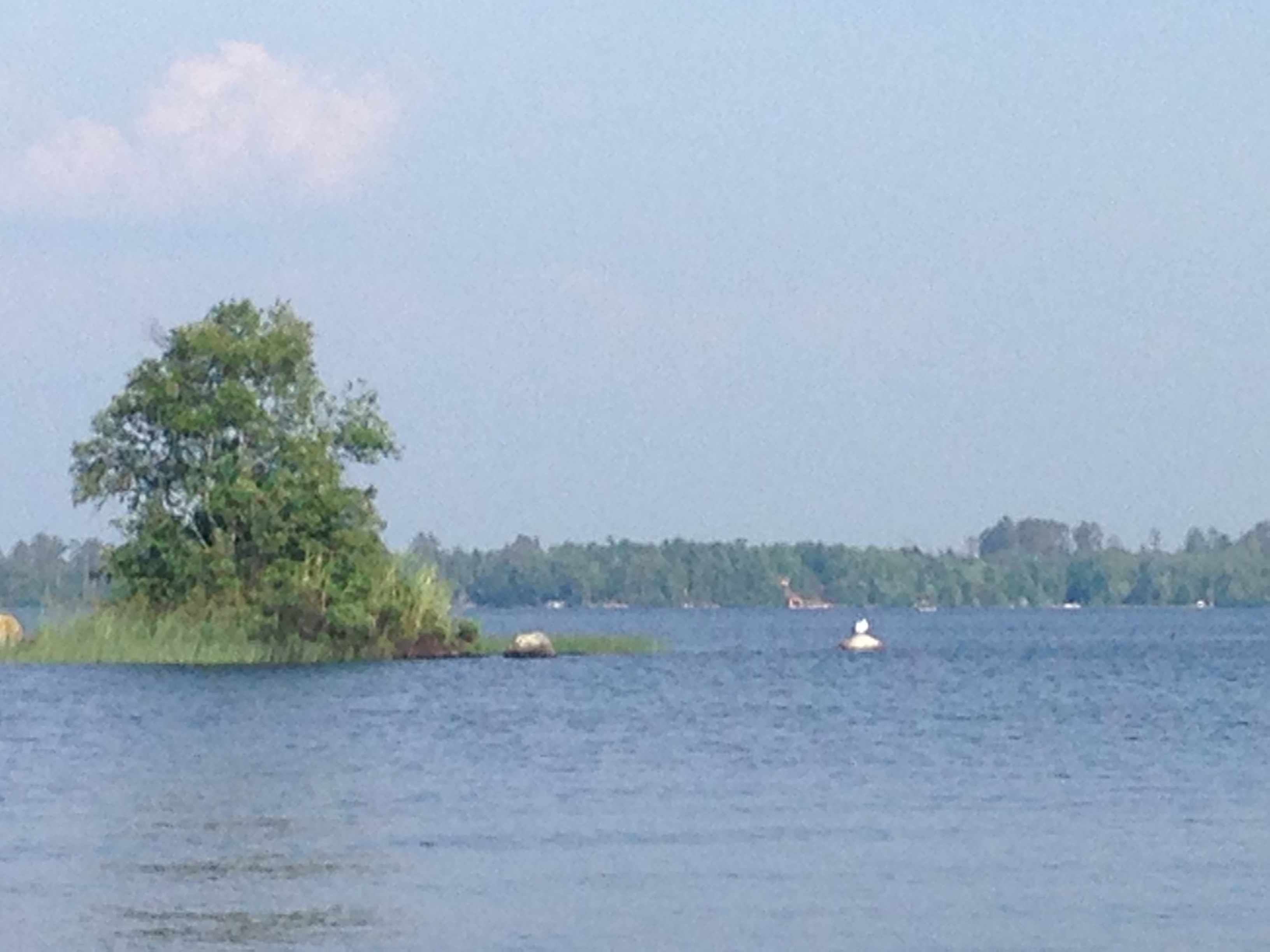
Last week, I took my first approved trip since my health issues earlier this year. I was so excited, as there was only one destination that I wanted to visit in order to take a break, Lake Vermilion, MN. The location where John and I were married, and where my family has a cabin.  Last summer I spent approximately 5.5 weeks there and felt very refreshed for the new school year.  This year, I was hoping to find peace and perspective before returning to therapy and the start of the school year in the fall.  Despite my excitement, I also admit that I quite nervous.  I knew that I would not be able to do many of the tasks I had done in the past.  Activities such as: taking walks, laying out near the water, and helping take down fallen branches were not endeavors I anticipated being able to participate in.  The whole week prior, I kept thinking to myself, “if these were the things I knew I would struggle with, what other things might I discover I could no longer do?”
The week of the trip, started with John and I attending a wedding for one of my former students.  It was great fun! IMG_1136Yes, it is true, I learned I really can’t dance now…except slow dance, which is more just me swaying back and forth, and the buffet line was something John had to help me with (I assure you, that he had no problem helping me with food). Despite these issues, I believe I appreciated more than ever before the time spent with good friends celebrating the love of two people.  Valuing time spent with others is something that has become even more important to me since January. John kept asking me if I was tired, and even when I became tired, I didn’t want to leave because I knew that the moment could not be captured again.

11251126_10152805626251582_5109505872335793037_n

The next day, John and I were off to northern Minnesota.  We get to Lake Vermilion by going through Wisconsin, which is a much prettier state than I had ever realized.

Crossing from Wisconsin into Minnesota with a view of Lake Superior

Crossing from Wisconsin into Minnesota with a view of Lake Superior

One of my favorite parts about going north during the summer is that you get to experience spring all over again.

Haven’t a clue what these flowers are, but I believe they were orange just for me!

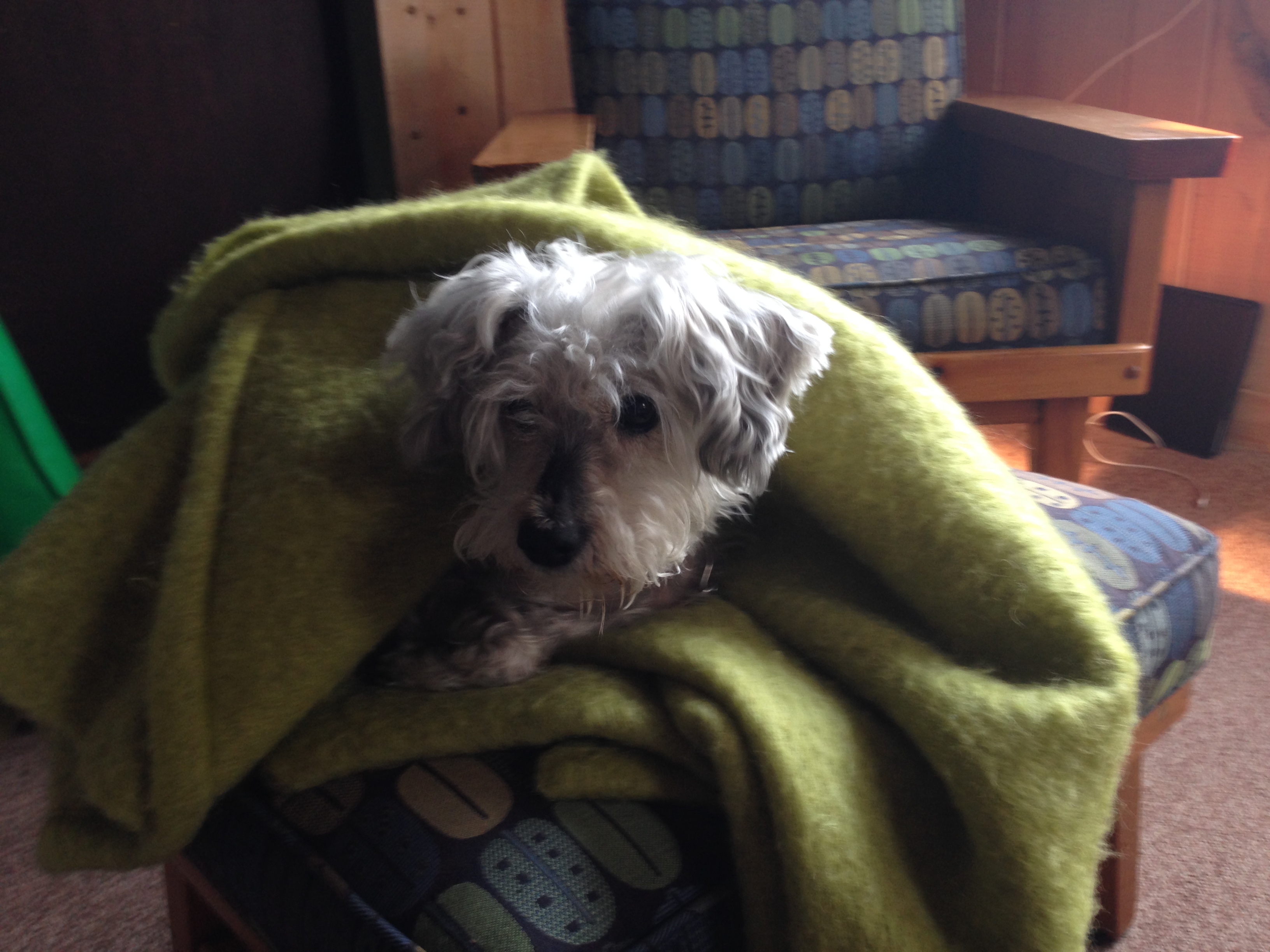
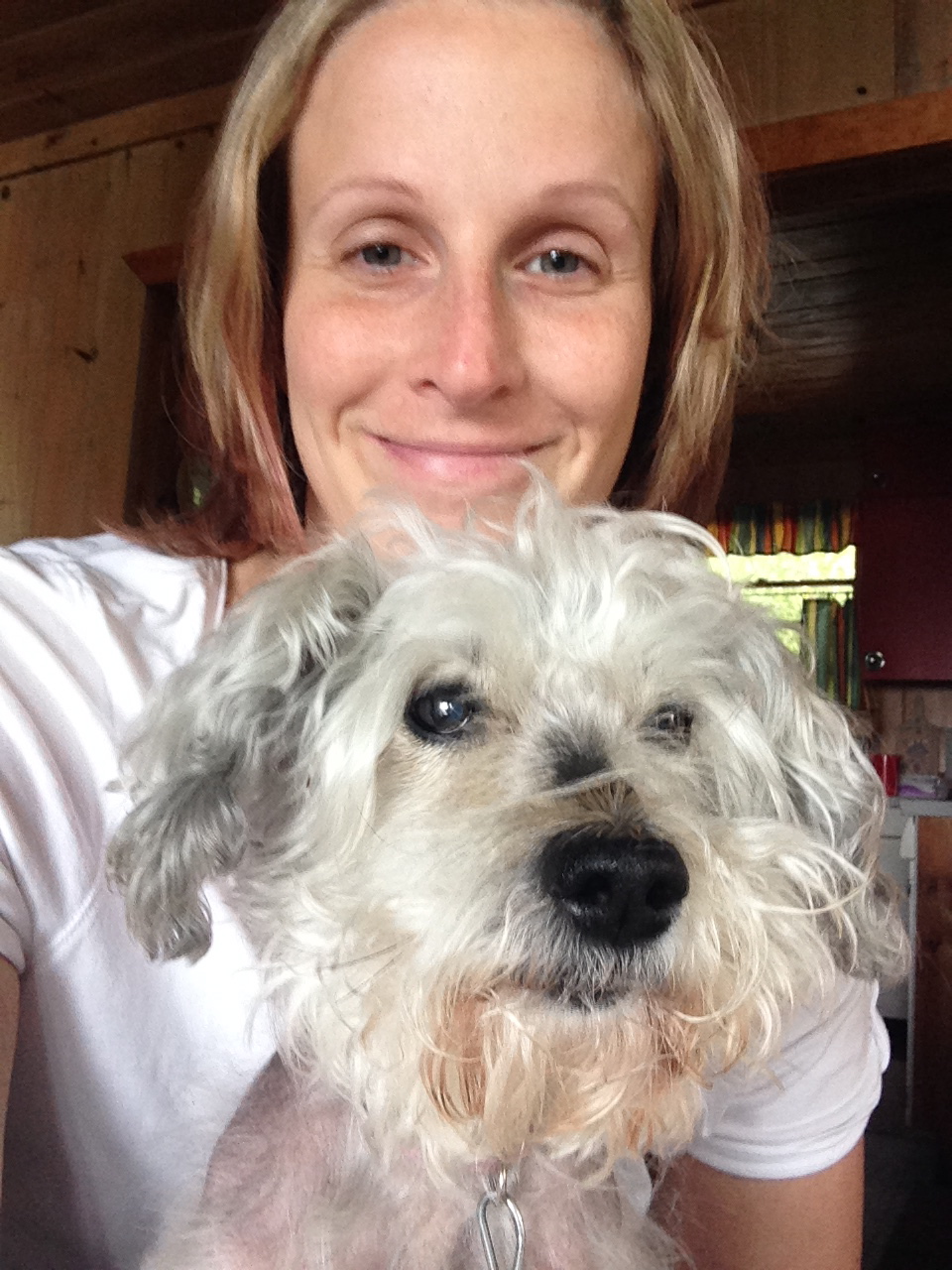
I spent a lot of time snuggling with Lucy, which is always wonderful.

Best. Dog. Ever.

Best. Dog. Ever.


We often rested at the same time.

We often rested at the same time.

This was often the view I had when she sat close to me.

This was often the view I had when she sat close to me.

Again, Best. Dog. Ever.

Again, Best. Dog. Ever.

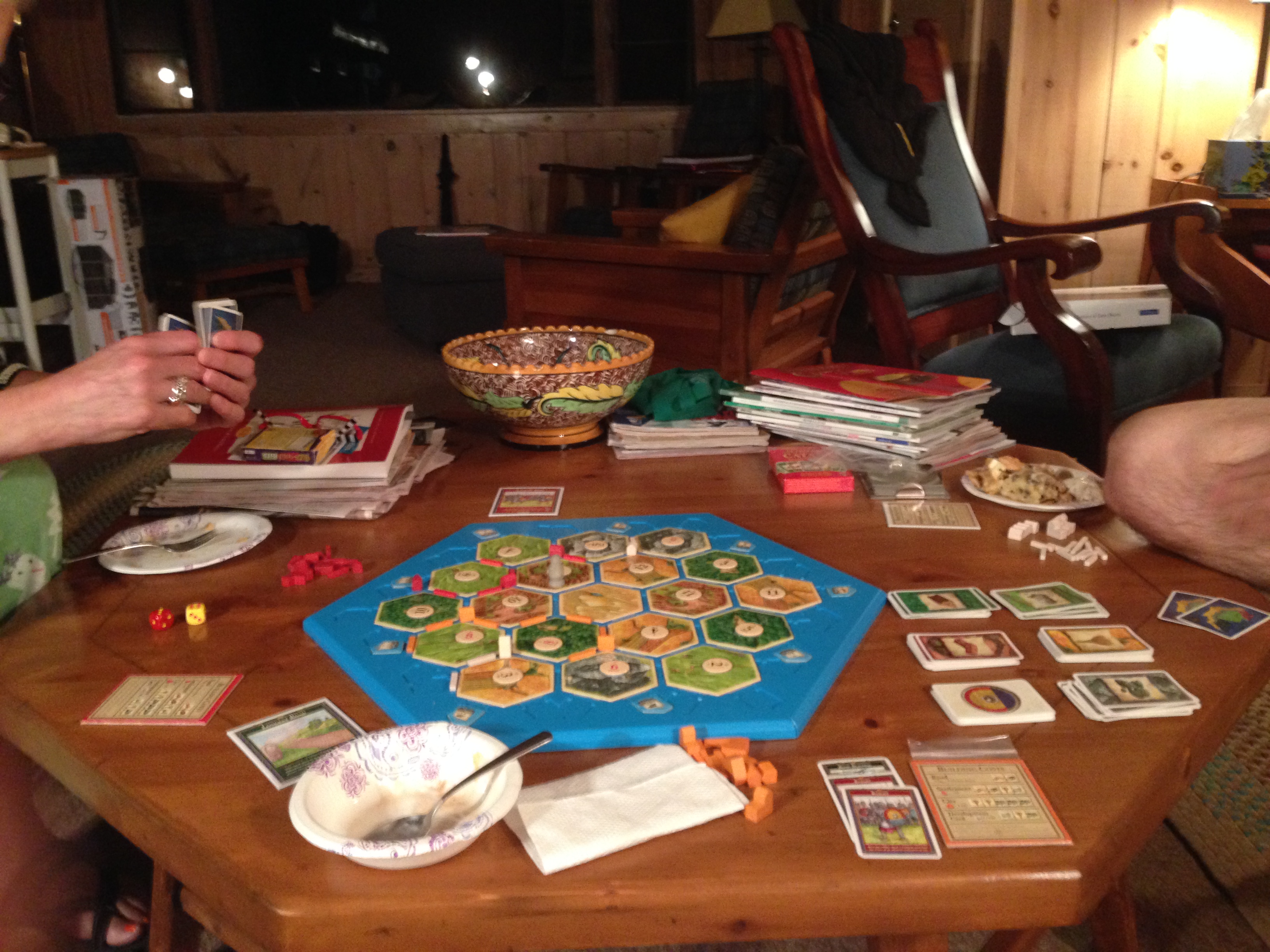
And playing games with my family.

I won more games than John, which is really all that matters. ;)

I won more games than John, which is really all that matters.

We even put a screened tent up, so that I could go outside to read and take naps.  It was wonderful.

Or, rather, my mom and John put up a tent for me to use. Thank you, thank you.

Or, rather, my mom and John put up a tent for me to use. Thank you, thank you.

And this was my view.

IMG_1142

Something I noticed is that due to my new environment, I could do several things one day and the next I would need to sleep quite a bit. Biologically, I knew this made sense, as I was taking in new information, and my brain was rebuilding those connections, but I didn’t expect to be so tired just from spending time walking down to our dock and back up the hill.

The day before we decided to leave, my uncle took us out on a boat ride. It was so wonderful! And, quite funny too.  🙂 Everyone kept asking me if I knew how to swim and if I could go into the water with my leg the way that it is. I found it humorous, as I’ve been swimming since I was a kid, and I haven’t forgotten. I responded by telling them that I wasn’t going to start gulping water if I did find my way into the water. This response, turned the conversation toward a boat crash. What if the boat crashed, nobody could get to me, and I would have to tread water for 20 minutes? Mind you, our boat is not the only boat on the lake, and it was July 4th weekend, so there was a decent amount of traffic. Thus, I didn’t anticipate having to wait 20 minutes for help from another boat. Furthermore, everyone on the boat knew how to swim, and I couldn’t imagine a crash in which I survived and none of them did, so I knew they would help me if I needed it. It was clear, however, that the only way I was going to be allowed to go on the boat trip would be if I wore a life vest, which I haven’t worn in forever.  So, I agreed, and my mom helped to snap me into it.

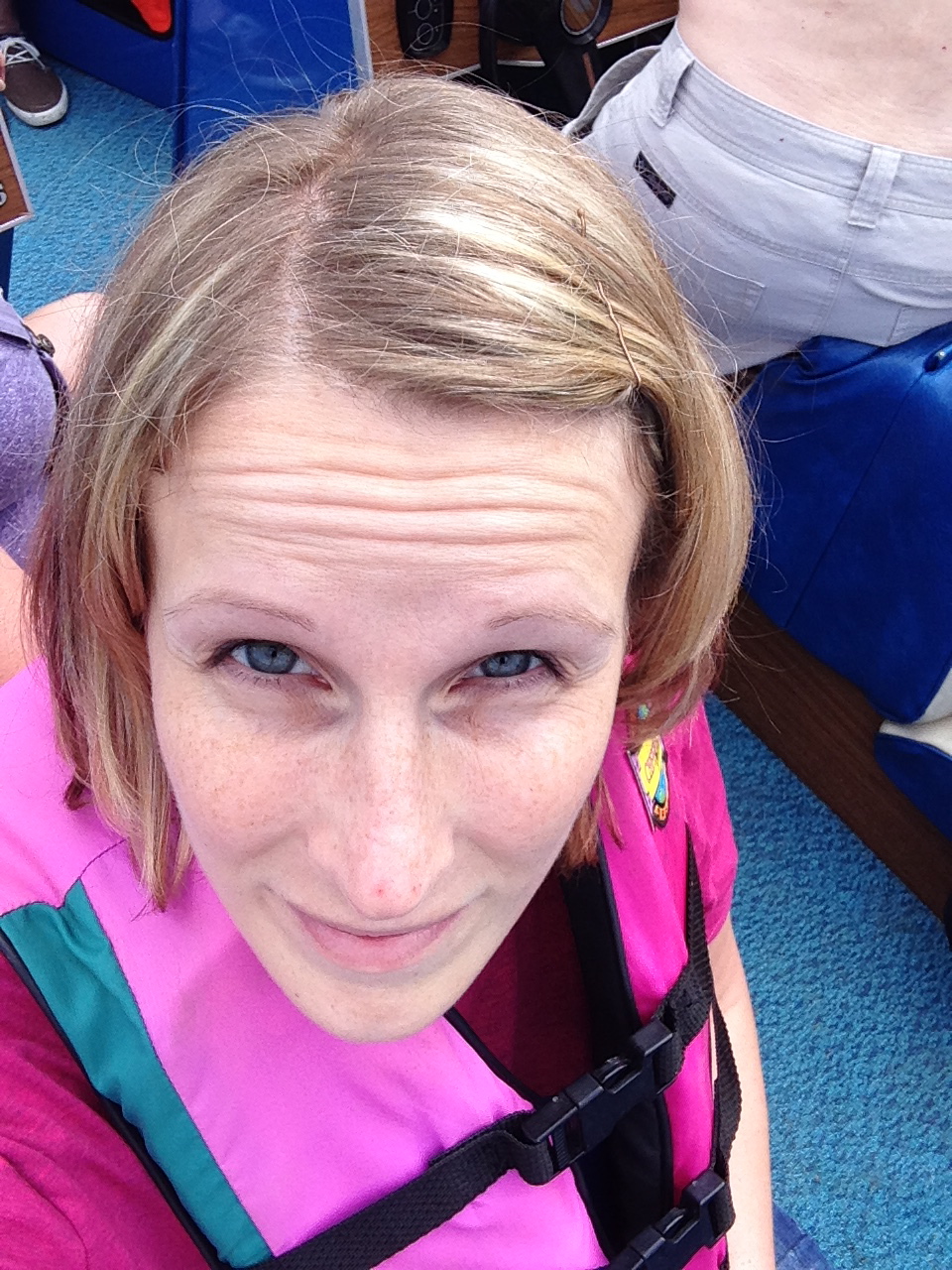
My best selfie with a life vest on.

My best selfie with a life vest on.

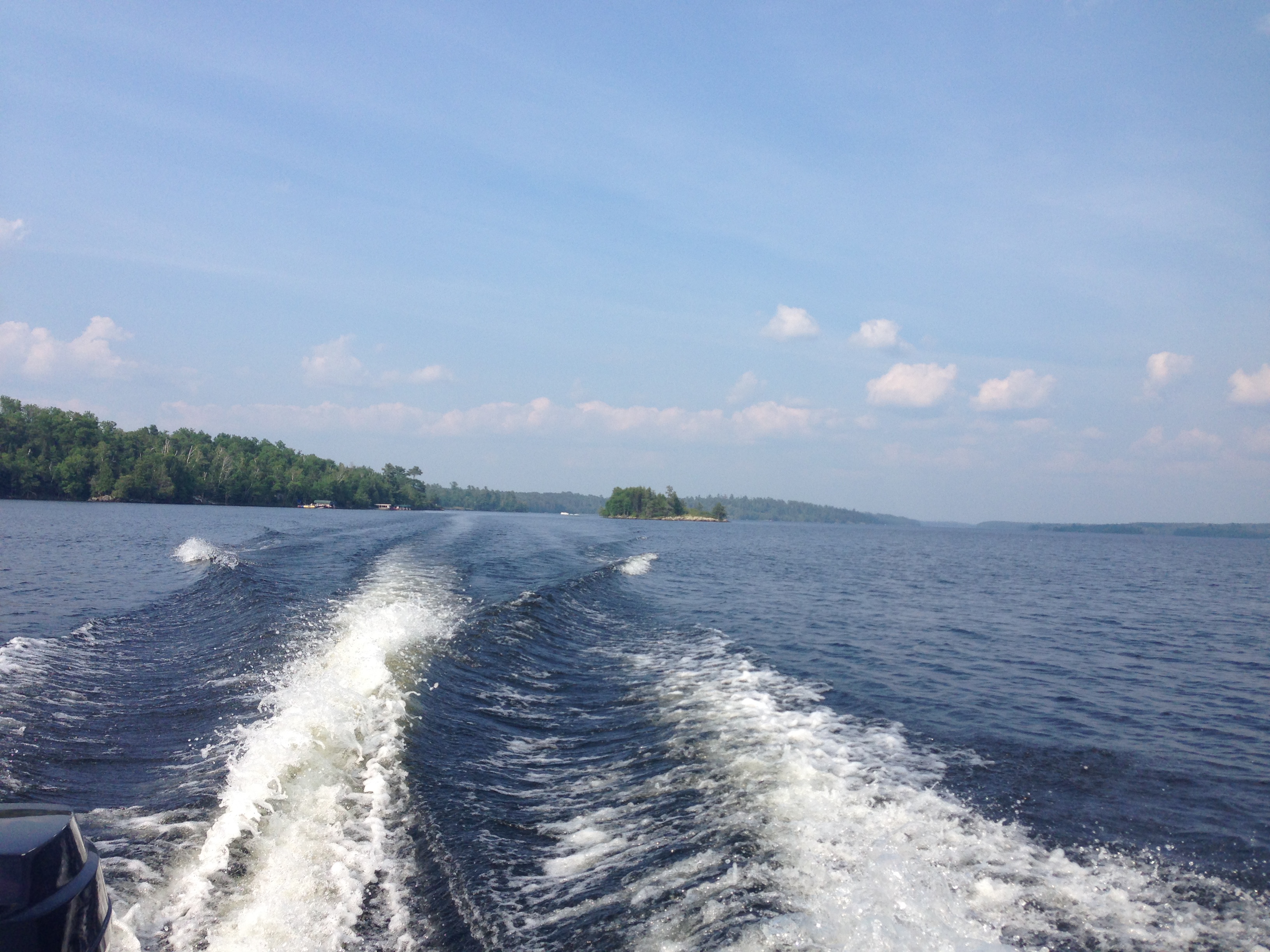
And the view of the lake from the back of the boat when we started the trip.

This was my view just to get us around the dock.

This was my view just to get us around the dock.

We started heading to new places and my view got better.

We started heading to new places and my view got better.

The view of the John at the front of the boat.

John's seat up front.

John’s seat up front.

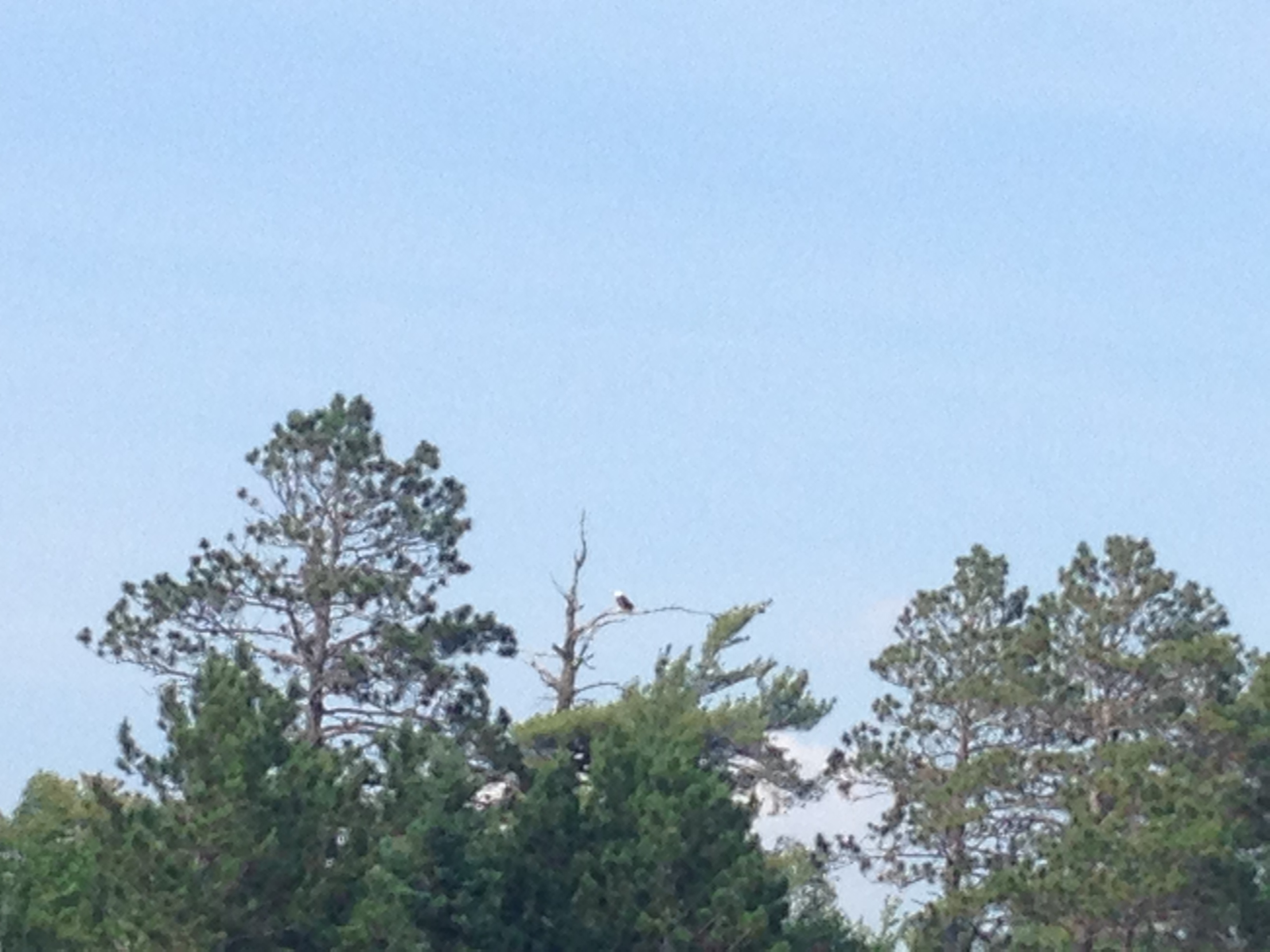
We first went to check out the eagles that we can see from our dock and cabin flying around, and calling to each other.

Do you see the eagle?

Do you see the eagle?

How about now?

How about now?

We then boated around a bit, enjoying the beautiful lake before stopping at Moosebirds for an ice cream cone, and eventually heading back to the cabin.

I had the best sleep while I was at the cabin, and have struggled a bit sleeping since my return. I’m not sure that I’m necessarily surprised by this, as Lake Vermilion was the location I went to in my head whenever someone (nurse, family member, friend, etc.) was trying to help calm me down while I was in the hospital.

I cried when I had to leave at the end of the week. Both tears of happiness and sorrow. Sorrow because I don’t anticipate I will get to go there again this year, and because I recognized how much I took for granted in the past by having two functioning legs.  Happiness because I did it. I went to Lake Vermilion, and enjoyed it more than I probably have ever enjoyed it before. Yes, it was relaxing to be in the great outdoors beyond my yard and the town of Macomb, but it was extra relaxing because I was with loving family.  They helped to make my time special, and just being around them helped to restore my motivation to keep improving.  I hope next year to go with even more of my family members.

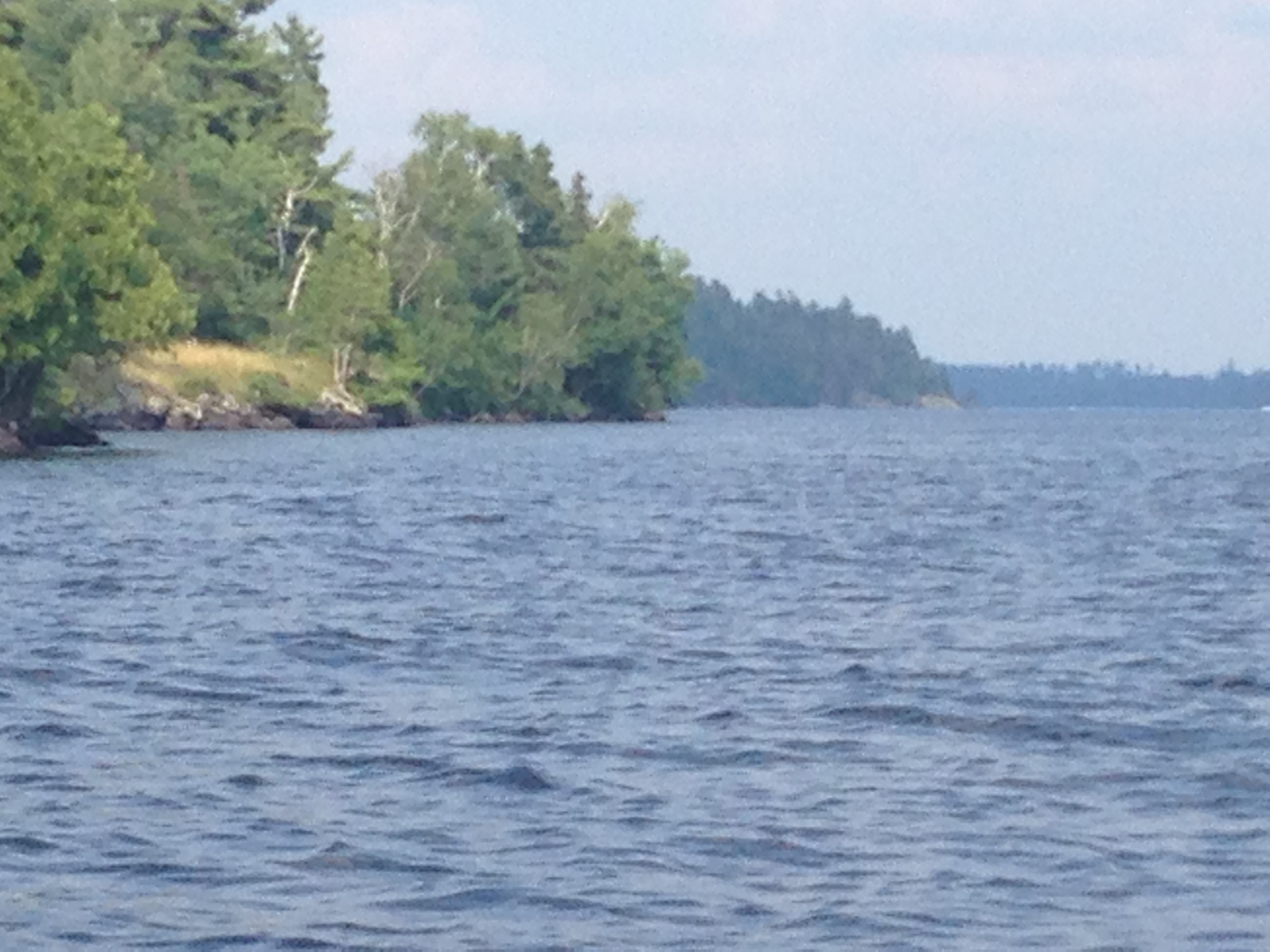
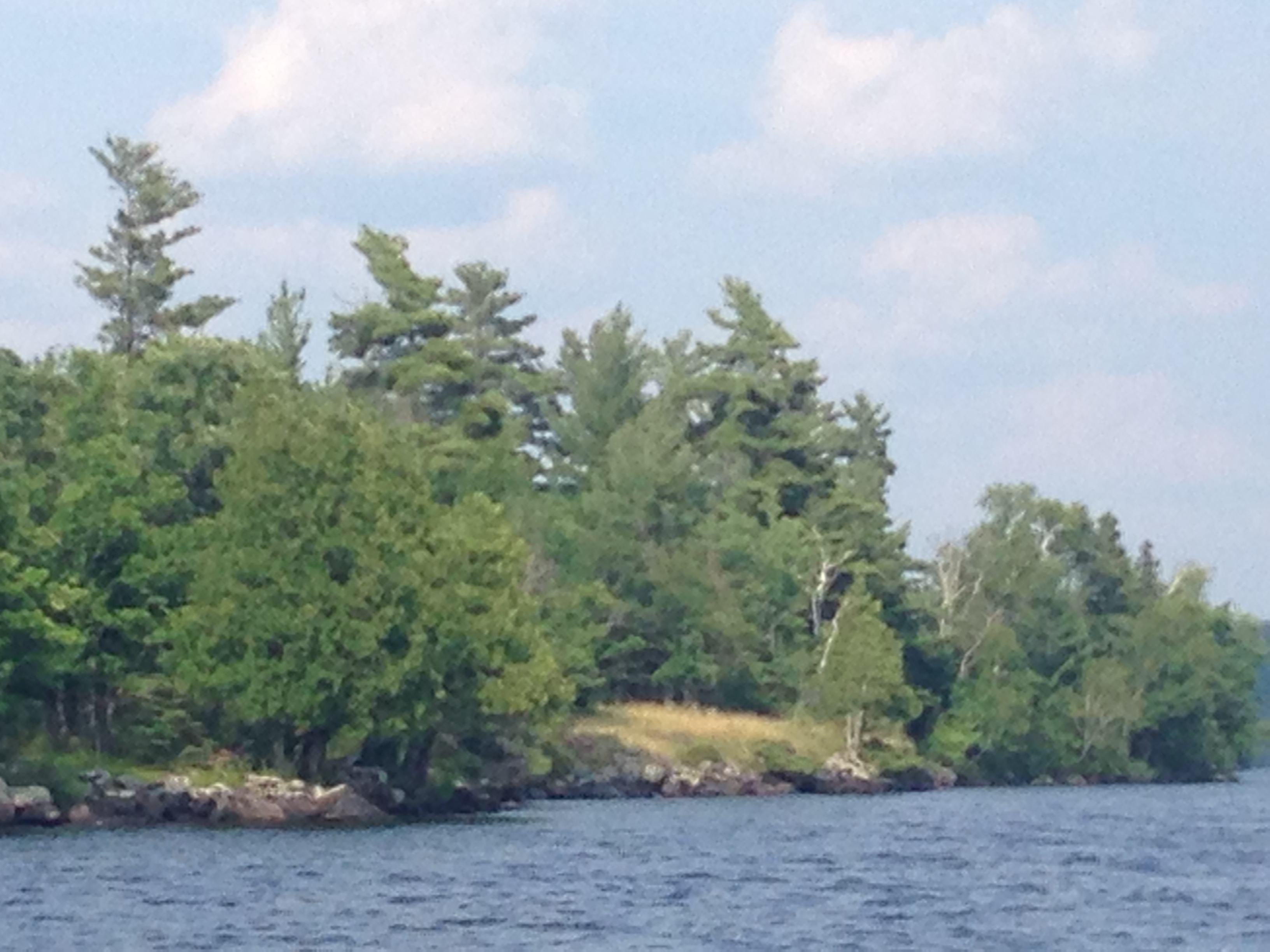
Just a few more photos of the lake from the boat.

Just a few more photos of the lake from the boat.


IMG_1157IMG_1161IMG_1160

I did it. 🙂

The “How”, Spoon Theory, and #SAPros

In January, I experienced a medical crisis that caused me to reestablish all of my personal and professional goals for 2015.  I have been working toward my goal of recovery and adjusting to my “new” normal ever since.  Recently, I was given permission to return to my teaching position in order to teach one course this summer.  I am both excited and anxious about it.  So far, it is progressing nicely, but week one is always an easy week, because you are getting the course established and going.  🙂

Beyond my anxiety around not being able to fully walk due to my acquisition of foot drop, I knew I would be challenged to have enough energy to fully return to work.  I’ve been told ever since I “woke up” on January 7th that I would be tired and would need a lot of rest.  And, yes, early on this was true, I did need rest.  Yet, my need for rest has evolved as I’ve progressed in my recovery (at first I was tired from coming back to life, and now I get tired from using more higher order cognitive skills).

brain-sleeping1Recently, I was describing the unique way in which I found myself tired– “I can feel my brain and it is tired”, and a friend told me that it sounded to her as though I was describing Spoon theory.  A few days later, Spoon theory was shared on the Stroke Talk for Facebook group that I am a member of, so I decided to spend more time with it.  Prior to my January experience, and the conversation with my friend, Spoon theory was not a theory I’d come to know.  It isn’t found in any student development book that I know of, nor have I come across it in any counseling theory texts.  I found it to be accessible, easy to understand, and quite important to our field when considering a host of invisible disabilities.  (I will assert that I believe we quite often complicate how to bring theory into practice by not using accessible examples for all—perhaps we need to use more dining utensils 😉 ).  midi-spreader-appetizer-fork-demi-spoon

Furthermore, I teach the Student Development Theory 1 course at Western Illinois University and during class we spend time exploring how development occurs.  We do this because I believe it is powerful to know how development occurs if one is going to promote development amongst students, not just what the identity or characteristic that is developing.  It is challenging to explore development theory this way because it is almost always easier to identify “what” the theory is developing rather than clearly articulating “how” it is being developed.  As we do such exploration as a class, we begin to realize the power dynamic present when one determines a developmental place:

Does one place another in a specific spot in their development? 

Does one allow another to share where they are at in their development for themselves? 

These are important questions.  They are the difference between prescribing developmental interventions, as if we ourselves are fully developed, and creating developmental interventions, with the assistance of others, because we acknowledge that none of us are fully developed.

I’m not necessarily advocating for Spoon theory to be included in student development theory courses, although I do secretly think it would be a good idea.  I am asking us to consider what it would look like if, instead of focusing so much on “what” is being developed, and the end result of that developmental process, we start the conversation about bringing theory into practice by focusing on “how” development is occurring.

For example, Spoon theory asserts that if my foot drop heals (which I am really hoping that it does) and I am left with a non-visible neurological disorder due to my January experience, I will only be given a limited number of spoons for the day that I can use to accomplish my tasks.  It also claims that each of my tasks will use up a spoon, which might result in me only having one spoon left for the day come 6 p.m., but more work to do.  In other words, instead of focusing only on what my decreased energy is at various places on my road to recovery, Spoon theory also helps others understand how it is that I’ve come to have decreased energy.  And, personally, I’ve found that understanding both how I’ve come to have decreased energy, and what decreased energy is like for me, allows others to better understand my experience and support me as I continue to develop toward my goal of full recovery.  If this is how I’m left feeling about the inclusion of attending to how, and not just the what, in the process of development, imagine how our students might feel if we were to do the same as we put theory into practice as student affairs professionals.  It certainly seems to me as though it would create a more inclusive environment for our students.

Congratulations to the Class of 2015 New Student Affairs Professionals!

The following is the speech I gave at the graduation reception for Western Illinois University’s College Student Personnel program 2015 graduates.  I share it, slightly amended, because I think that it applies to all graduates entering the field of student affairs as new professionals.  Congratulations to everyone!

Hello, parents, family, and friends. My name is Sarah Schoper, and it is wonderful to stand before you here today. I want to start off by thanking you for being who you are because who you are has had a profound impact on the students. I have truly valued getting the opportunity to learn with each of them, and find them to be amazingly, beautiful individuals. I look forward to seeing how they contribute to the world around them, and cheering them on from afar.

(You should be forewarned that my mom told me to be funny so that I wouldn’t cry, and what I’m going to share is my attempt to do that.)

As you may have heard from your student, I decided to take a last minute sabbatical this semester (they probably referred to it as a trip to the hospital). Apparently, I felt the need to do a little more research on the biology of learning, and have indeed discovered that the experiential learning cycle is how learning occurs, that neurons need to connect to build pathways in the brain for learning to happen, and that we take in information through all of our sense that contributes to our learning, amongst other things. I am still in the midst of my research, also known as therapy, but so far, I can assure you and your student that I’m doing everything I can to teach only accurate and true information. It is this most recent research process that I’ve engaged in that has led me to five points, I want to share with the graduates to consider as they continue on in their life’s journey.

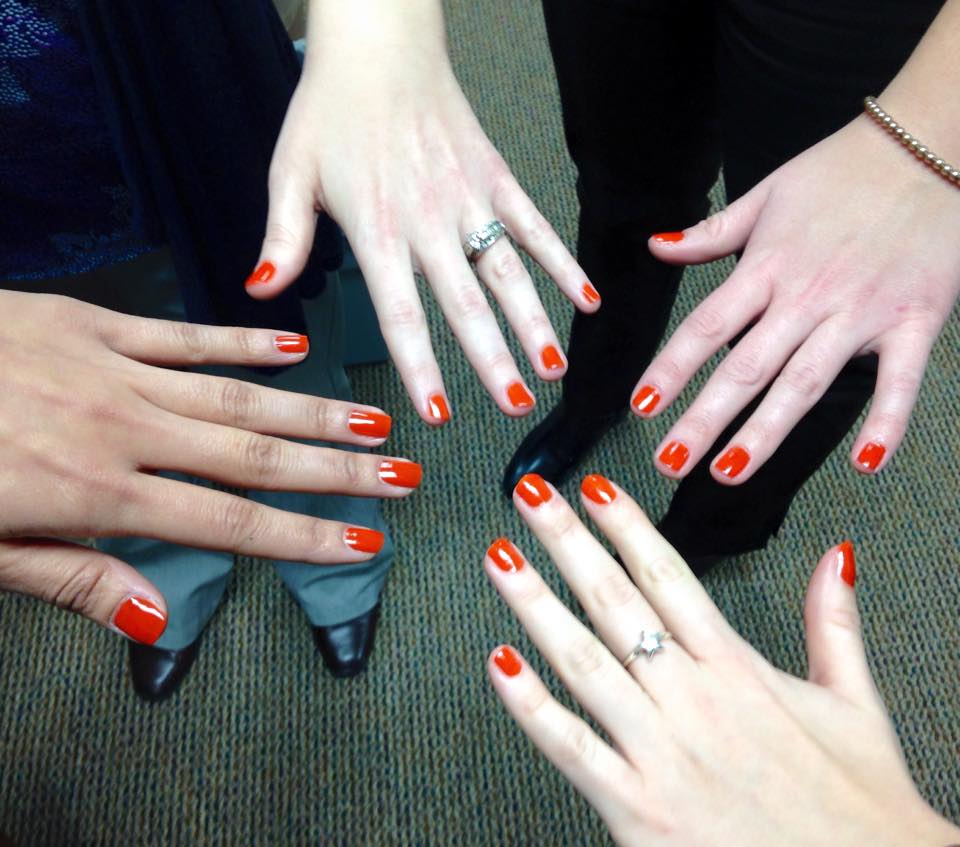
1.  Celebrate everything (and if you do so with nonalcoholic mimosas, various owl gifts, inspirational items, orange nails, and motivational quotes) all the better! In our world, it is far too easy to see the gl10968367_10204276114079969_5288278294979119983_nass half empty rather than half full. Don’t underestimate the small steps you take because they add u10562959_10206085533515956_3287090894491426514_np over time to big changes.

2. If you are doing your job well, you will be uncomfortable and feel quite challenged. (no, this doesn’t mean that you should go around instigating issues haphazardly). Going into the field of student affairs means that you get the opportunity to impact every day (no matter your position) the lives of the students you interact with in ways that are life altering. This enormous amount of responsibility and privilege should leave you feeling uncomfortable and challenged for many reasons, including that by doing so you are also continuing to grow and develop. (which, as we learned together in theory class, most of us don’t want to do.) So, breathe deeply, stand tall, and be persistent as you find yourself feeling uneasy, it might just signify that learning is about to happen, which is hard, but also might just provide an amazing opportunity to grow.

3. (and this relates to the point I just made about seeking out uncomfortable experiences and challenging yourself.) Do your best to step back so that you can get a different perspective on the situations you are experiencing. This can mean taking time to quietly reflect while going on a walk and/or it can mean discussing a situation with a trusted friend or mentor in order to help process out your experiences. We discussed once in class how we tend to focus on those who we interact with the most (which are also those who happen to be like us the most), but remember it is important to be aware of those we don’t spend time with and to consider why that might be. Especially since student affairs exists to serve all students.

4. It is okay to be protective of your environment, so that you can be yourself, and perhaps more importantly, so that you can have hope. In almost every class, we’ve discussed the interaction between environment and person, and we’ve established that it has a profound impact on how a person makes sense of the world, which in turn has a profound impact on what they contribute to the world. If you don’t create space for hope to exist within the educational environment, it is far too easy…especially these days, to become negative and cynical, which will then impact the work that you do and the learning that occurs for your students. If you don’t believe me about this, consider times when you’ve been around people who are pessimistic about their experience and how easily their negatively caught on and became the thing to do…almost without conscious realization of it. You will pass along such negativity to those coming to you for help if you do not create space for hope.

5. (and perhaps most important) Show love to everyone around you. I know that you are all capable of doing so, because you have shown it to me (especially this semester as I’ve been doing my research 🙂 ). Doing so, won’t always be easy either (again, sort of like this semester), but it has the ability to transform the world into a kindeunconditional_lover place, and I know this because it has transformed me.

During your program interview days, I remember sitting in the academic discussion, and one of you asking me to share what I’ve learned from the students since I had just finished talking about how learning goes both ways. At the time, I had a lot of thoughts in my head, and stumbled through my answer—the student came to WIU, so I must have done something right.  🙂  Now, that you all are about to graduate, the answer to that questions seems so clear. I’ve continually learned how to love more unconditionally, and for that, I am ever grateful. You’ve helped transform me into a stronger person, and I thank you for that because I’ve needed that strength this semester. One of my mentors, Marcia Baxter Magolda, once told me to never underestimate the students, and I sincerely believe that and encourage you all to hold onto it. All students have something to contribute, and it is amazing and beautiful to acknowledge and an honor to be a part of that.

So, in conclusion, I will leave you with two quotes. First, a Christopher Robin to Winnie the Pooh quote (seems sort of fitting at a graduate level graduation):

632f563f7dcc6c1fc67c531d3653d147

The second quote is from a spoken word poet, Shane Koyczan: https://www.youtube.com/watch?v=gZfhpD42Z4Y  The specific quote I read starts on 4 minutes, 2 seconds.

“Shine in the dark places. Lend the world your light.”

From my heart to your heart, thank you for helping me to find my light this semester—I can only hope that I have returned the favor and helped you to find yours during your time in the program. Congratulations!

11017198_10103664047626038_568414393632349137_n

My Left Foot

My left ankle might not ever move again on my command, and I might not be able to spread apart or wiggle my toes.  I have foot drop.

This is a terrifying thought to me for many reasons, as well as a fact that I might need to come to accept.  Yes, I do realize that it hasn’t even been a full four months (it will be on May 6), since my life exploded (a PE, two seizures, two strokes, and cardiac arrest for an hour) in January.  And, I do know that some people get movement back a year later, and some times even two years later.  So, please don’t hear that I am giving up hope because I am not.

I have hope. hope

But, I also want to not have my expectations up too high because stroke depression is real and I don’t want to slide into it.  After all, strokes are the leading cause of long term disabilities in the United States.

I am working hard every day to accept what has happened to me, and appreciate that I am still here and still have a lot going for me.  This all means that I have a tug-of-war post-copygoing on inside of me and it is not easy.  Part of me is focused on having hope, and part of me is working on accepting what has happened to me.  I’ve been encouraged to just focus on having hope, and I try.  It is just that it is much easier for someone to say that to me than for me to do.

I struggle daily with questions such as:

It has been almost four months, why am I not back to normal? 

All of the rest of my leg has woken up, so why is my foot so insistent on sleeping?

What else haven’t we tried that we can try to get it going?

Did it just move, or did I imagine it?

There are several ways that I work through my tug-of-war:

1. I am quite protective of who I surround myself with because I need to keep having hope.  I can’t spend time being around thoughts and feelings that are negative because it is too easy for me to see my situation as negative.  It isn’t that I don’t share with those who are near me how I am feeling, which is often that I am sad, but I know that I need others to respond positively (which often means just being with me) even if I am crying.

2. I try hard to keep moving.  My older sister said to me when I first woke up in the hospital, that the best thing I could do for my recovery is to keep moving.  I am not sure I fully understood what that meant until recently, and I hear her voice in my head each time I want to just be lazy and do nothing.  I’ve also recently been exploring yoga for foot drop, although I’m terrible at it–still, I am determined.

3. I journal about my feelings related to my left leg.  I have never really spent time journaling about one specific part of my physical body before, but it makes sense for me to do so now.  Yes, my left foot and my need to wear an AFO (ankle and foot orthotic) means that I can’t be outside like I used to, but that doesn’t mean that I can’t go outside. I try to become fascinated by my leg, and notice if it shakes and consider why that might be (am I nervous, etc).  I want my left leg to remember that it is a part of my body, and needs to listen to my brain again.

4. I process through in my mind how much privilege I had when I didn’t have to think about walking, and the fact that I might be able to make a full recovery is in itself another privilege.  I still have many things going for me even if I have a physical disability the rest of my life, so I will be okay if this is “as good as it gets”.

5. I can make a cane look cool…so, who cares if I have to use it the rest of my life.  It helps remind me to stand taller, which is good for my posture.

Still…I really want my left foot to wake up.  064151-high-resolution-dark-blue-denim-jeans-icon-people-things-foot-left-ps

Seven Lessons I’ve Learned From My Strokes

2015 has been quite the year to say the least.  Lately, I’ve been reflecting on various ways in which I’ve begun to establish a “new normal” for myself.  The following are 7 of those ways:

1. Thank goodness for long arms.  3417c9e4d91ec9173f180293fc781b59They’ve helped me be a state rated basketball player for blocked shots in high school, and make the all-conference team, and they’ve annoyed me when I’ve gone clothes shopping.  But mostly these days, I’m ever grateful for their ability to reach…especially when taking a shower.  I currently get the opportunity to take a shower in a shower chair, which means an extendable shower sprayer had to be installed too.  Ideally, before I take a shower either I or my husband remember to take down the sprayer and set it in the tub, but there has been occasions in which it has been forgotten.  During these situations, I used my arms to get it down without having to stand up, so that I don’t fall over (falling would pretty much be the worst thing that I could do).  My arms have also helped me greatly in putting on my afo, getting dressed, and in completing other tasks that require a long reach.


2. The quad cane has multiple uses.  This realization really should have been something that occurred to me after watching the Pixar movie Up for the first time.  29-1But, the many uses of it are coming into full effect now that I have one and use it.  I’ve used it to reach for puzzle pieces accidentally dropped on the floor.  I’ve turned it around to use the hook end to grab my MDH rehab bag.  I’ve used it to open and close various curtains in my house.  One day I will hopefully no longer need the quad cane for walking, but I might just keep it around for its other functions.


3. There are added benefits to living in the South.  I returned home at the end of February, and for the first few weeks there seemed to be a direct causation between my need to go to therapy and bad weather.  Unfortunately, this put a kink in my opportunity to take walks outside.  It has since turned to spring 🙂 , and I enjoy walking around the neighborhood.  But, I did notice how envious I was of my friends living in warmer climates during the end of February and most of the month of March.  Of course, I think I would feel different if it was July/August that I was talking about…I’d probably be complaining about the heat.  I fully support all of us getting the month of February off to move to a warmer climate to heal in various ways.


4. Fast does not exist.  M.C. Hammer declared Hammer time, and there now exists Sarah time.  It isn’t a matter of me waking up early enough, or not trying.  It is simply that I cannot move fast.  Don’t get me wrong, I’m not ridiculously slow, but I take a more relaxed pace these days. slow-300x185


5. It is sometimes better to not have answers.  When you don’t know why something occurred, you have more time to do things like notice each day how much the spring flowers have grown, the trees have bud, and you appreciate the birds chirping.  When you know the answers to things you often have a responsibility to use those answers to inform your experience in the world, and it can cause you to not notice many things.


6. Living takes courage.  courage-1Prior to all of my health concerns, I don’t think I was fully aware of how much courage it took for me to live my every day life.  I certainly realize it now, and more fully appreciate the people who are giving me opportunities to live.  Yes, I look different when I’m walking, but in order for me to get better, I need to be given chances to do what I used to be able to do.  Asking for those opportunities and then taking advantage of them takes all of the courage I have left.  I get that providing me such opportunities might make some people feel uncomfortable for whatever reason, but honestly I can’t help but feel so strongly that those folks need to work on getting over it.  Those issues aren’t mine, they are the other persons and to truly be accepting of others we need to be aware of what is our stuff and what is their stuff and what they are doing to our interactions/relationships.  After all, we are in this world together.


7. Learning is painful.  I had a student once who coined the phrase “if you aren’t crying, you aren’t learning”.  I don’t know that crying is necessary, but pain is most certainly necessary.  Both here in Macomb and when I was in Peoria, if I shared with any of my therapists that I was feeling physical pain of any sort, their response was often “Good! Pain is the first feeling to come back, so hopefully it means it is waking up.”  This, of course, was not the response I was aiming for, yet I did notice the pattern associated with pain and physical ability improvement.

Accepting Identity in Student Affairs

In my last blog post, I wrote about the connections I saw between rehab and learning. Since that post, I’ve been home for three weeks going to outpatient rehab. Outpatient rehab requires me to be outside much more, and living at home makes it so that my world is much bigger than it was when I was living on the second floor of the hospital. This also means that there are many more chances for me to be “watched/observed” by others. Now, I’m not necessarily someone who care what others think, but since January 6, I have felt much more exposed than usual while I am adjusting to my own “new” way of being in the world. This includes wearing an ankle and foot orthotic and walking with a four point cane.

014839001

Last year, I attended and completed a series of workshops put on by Western Illinois University’s Disability Resource Center called Faculty and Staff Partnerships for Accessible Solutions (FASPAS). During these sessions, I learned again about the importance of universal design, and how I could bring such concepts into the learning environment within my classroom. I say again because as a student affairs professional I sat on committees at other institutions and attended workshops on accesssibility in higher education. At these workshops, there is always discussion about letting the person with the disability speak up and ask for help…don’t assume you know what they need. What there is a bit less focus on was the “feeling” in the room when everyone gets silent simply because you walked in to take a seat. The whole journey I am on, has helped me to realize that I, too, was probably one of those people, who suddenly got quiet when someone who looked like they needed my help walked into the room. Now, however, I feel quite different about that silence. I get it, I don’t look “normal”, but I am still the same person I was before, and I am on the journey of integrating a new identity into the whole of who I am as a person.

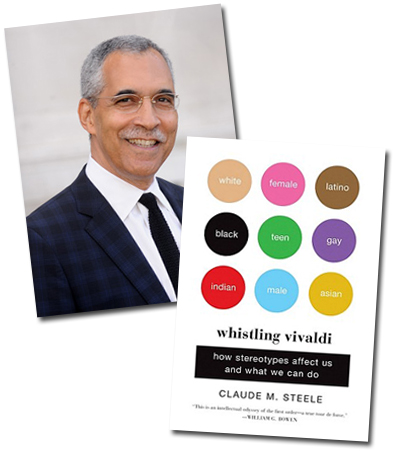
Recently, I finished reading the book Whistling Vilvaldi: How Stereotypes Affect Us and What We Can Do by Claude Steele (2010). In Steele’s book, he writes:

“Prejudice matters. It can shape contingencies. But identity contingencies can profoundly affect a person–to the point of shaping her life–without her encountering a single prejudiced person along the way….But remember, contingencies grow out of an identity’s role in the history and organization of society–its role in the DNA of a society–and how society has stereotyped that identity.” (p. 212).

If you had the chance to be around me since January of this year, there are a few main points you might hear me share.

First, I am not dead nor am I dying any time soon (if I can help it).

Second, I still have my brain. Simply because I am working on my recovery doesn’t mean I can’t think and/or that I am suddenly stupid.

When I came across this quote in Steele’s book, I couldn’t help but realize that what I’ve been concerned about are stereotypes that exist about people with disabilities in our society. Not that anyone has done anything directly to me, but they exist because I know them and I am impacted by them because I want to make sure that I am not fulfilling them. So, I’ve been working extra hard to get better as fast as I can. Now, it does occur to me that I am quite privileged in the sense that I have somewhat of a choice about getting better. I say somewhat, because nobody really knows how much I will recover, and I find that while I want to recover fully, I also am trying to process through what it will mean if I don’t. Steele summed up my recent tasks this way:

“My mission in this book is to broaden our understanding of human functioning, to get us to keep in mind that, especially in identity-integrated situations, people are not only coping with the manifest tasks of the situation, but are also busy appraising threat and protecting themselves from the risk of being negatively judged and treated. Perhaps the chief discovery of our research is that this protective side of the human character can be aroused by the mere prospect of being negatively stereotyped, and that, once aroused, it steps in and takes over the capacities of the person–to such an extent that little capacity is left over for the work at hand” (p. 213-214).

And, I by no way think that I am the only person who has ever acted this way. Indeed, Steele’s book cites research that supports his points. It does cause me to pause, however, and realize in a much more intense and powerful way what the students attending institutions of higher education who are exploring various identities might be experiencing.

Now, Steele offers a way for us to help lessen the impact of his reaction:

“A central policy implication of the research discussed here is that unless you make people feel safe from the risk of these identity predicaments in identity-integrated settings, you won’t succeed in reducing group achievement gaps or in enabling people from different backgrounds to work comfortably and well together” (p. 215).

What I am learning, is that safe environments aren’t environments that simply state that “all people are welcome”, nor are they environments in which people have learned social justice speak (both, assertions I experience student affairs professionals make). For me,

safe environments are those without the intense feeling of silence because everyone is afraid that you might fall and hurt yourself.

It is quite important that we consider how we create these environments in student affairs in such a way that they don’t inadvertently trigger identity contingencies.

Whistling
Steele, C.M. (2010). Whistling vilvaldi. W.W. Norton & Company, Inc. New York, New York.

Rehab and Student Affairs

Between January 6-7, I experienced two seizures, two strokes, and cardiac arrest for an hour. The CPR I received for 57 minutes along with the staff at McDonough District Hospital helped save my life. Recently, I was released from rehab from Saint Francis hospital in Peoria where I was for a month with the Illinois Neurological Institute. Tomorrow, I get to start outpatient rehab back in my home town. Despite everything I experienced, I am blessed to not only be alive (woo hoo!!!), but to also be cognitively able. Please don’t get me wrong, I have never been more exhausted, but my largest challenge is learning how to walk…specifically, learning how to “wake up” my left leg from the knee down. I find it fascinating to go through my day of therapies and know what I know about the learning process. Three of the highlights include:

1. Learning happens through relationships. I’ve always known it to be true, but it is SO true! The relationships I’ve developed with my caregivers in the hospital have helped me to regain arm ability and part of my leg. It causes me to pause and wonder how much we consider the relationships we are building with others in our practice as student affairs professionals. And, perhaps more importantly what it means if we expect others to build relationships with us on our terms only, as well as what it means if we “give up” on a relationship.

2. People take in information through all of their senses. As they worked to “wake up” my hamstring, they’ve tried everything…ice, electromagnetic stimulation, visualization via mirrors, physically touching my leg, if there was a smell associated with my hamstring, I’m quite sure they would wave it under my nose. I wonder how much we spend time considering the messages we are sending to others senses as student affairs professionals? Or, do we spend more time focused on having people feel good about us, our program, the experience we offer, so that the quick program evaluation we offer out at the end of the program comes back with a positive score?

3. For learning to occur it must be connected to a previous experience. It is bizarre to wake up and realize that I cannot remember how to move my hamstring, but that is what has happened. So, in order to wake up my hamstring, I’ve been trying to remember what it is like. In order to do that, I have been moving my right leg’s hamstring and focusing on how it feels, and then trying to replicate that on my left leg. The frustrating part is that I can’t visualize what it is like to move my hamstring, so I kept asking my Physical Therapist to help me associate it to other things in an effort to relearn how to use it. I can’t help but wonder how often we connect to what others know already in our practice and encourage them to associate? Or, do we treat others like we are the expert and they don’t bring knowledge into their experiences with us?

I could go on about all that I’m learning about learning, I’m proudly a bit of a learning nerd :), but I highlight the above three points because I often think that we can be caught discussing how we want to “wake up” our students to their own behavior, and I wonder if we do so in a way that will allow them to learn what we are hoping they will learn. Or, if we simply expect them to learn because we told them to do so and then we are frustrated when they don’t meet our expectations.

Current update: My hamstring has started to wake up. 🙂 Now, on to the ankle in outpatient rehab tomorrow…

IMG_0913

IMG_0917

Microaggressions in Everyday Life

In November of 2013, I attended a Lilly Conference on Teaching and Learning in Oxford, OH. One of the conference speakers was Derald Wing Sue, and he presented on his recent book Microagressions in Everyday Life: Race, Gender, and Sexual Orientation. His talk was quite powerful for several reasons:

1. I can vividly recall some folks rudely walking out.
2. Sue ran out of time, and I remember being quite disappointed because I wanted to hear more.
3. I recall feeling like I wasn’t alone and that I wasn’t crazy for how I felt and made sense about experiences I’ve had.

These thoughts and feelings led to me placing Sue’s book in my Amazon cart for future reading, which I just so happened to find time to do over the last week.

51fgGR1xd5L._SY344_BO1,204,203,200_

Microaggressions, according to Sue, “are constant and continuing experiences of marginalized groups in our society; they assail the self-esteem of recipients, produce anger and frustration, deplete psychic energy, lower feelings of subjective well-being and worthiness, produce physical health problems, shorten life expectancy, and deny minority populations equal access and opportunity in education, employment, and health care” (p. 6). Sue goes on to discussed the negative impact of built up microagressions throughout one’s life. Although I read the book due to my own personal interests, I couldn’t help but consider if there is a way to include at least exerts from it into my classes (I’m still considering this).

Most powerful to me were the narrative examples that Sue shared from his research. I also found the book powerful because it caused me several times to consider counterarguments and then to question where such arguments came from, as well as why they came so easily. For example, when Sue discussed health impacts of microaggressions to various marginalized groups, I found myself wondering how he knew that the negative health issues were connected to microagressions. I could think quickly of numerous explanations for such negative health concerns that aren’t about microagressions–or so I thought until I continued thinking about it. I had to work to spend time considering the connections to microaggressions that Sue was discussing…at least a bit harder than it took to think of all the numerous explanations. I had to work harder despite connecting personally to several of the types of microagressions he discussed. For example, when I thought “oh, no that could be due to not eating healthy”, I then thought about all of the systems and structures that don’t make choosing to eat healthy as simple as choosing to eat healthy. I felt stretched through this process, and appreciated the book for providing such an opportunity. This isn’t to say that I necessarily agreed with all that Sue asserted (I’m “sitting with” much of it still), but I did find it worthwhile to consider.

One of the biggest overall takeaways for me was when Sue stated, “the most disempowered groups have a more accurate assessment of reality, especially related to whether discriminatory behavior is bias-motivated” (p. 47). This statement caused me to pause, and although it was provided early in the book (and repeated several times thereafter in a variety of ways), I’ve continued to spend time reflecting on it and what it means for my practice. I can’t help but wonder what the world would be like if such a statement was deeply believed by all.

Learning is Messy

Learning is messy.

I was sent this image a few years ago from a former student, and I think it perfectly portrays the learning process….at least for me.

1683_563683503665100_1201222256_n

Recently I’ve been revisiting the blurriness that the learning process is for various reasons (let’s be real…I’m probably do this more often than not since my research is on the learning process, so I probably don’t need to use the word recently or revisiting 🙂 ). One of the reasons I’ve been spending time reflecting on the learning process is because of what it means as a faculty member, which like other positions (e.g., student affairs professional), is no easy feat. Parker Palmer wrote a book titled: The Courage to Teach, and the title couldn’t be more true.

images

Learning takes courage no matter who you are, and spending time each week trying to facilitate learning for and in front of others requires that one learns themselves, so it is at least just as challenging. I could draw connections at this point to the concept of vulnerability that Brene Brown talks about:

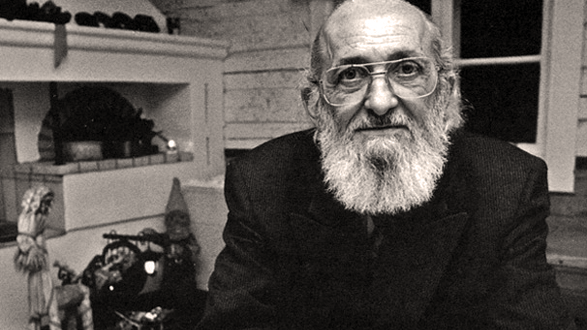
or remaining unfinished that Paulo Freire wrote about:

Paulo-Freire-BW

I’m not interested in doing that, however, because all that would I would be doing, or at least how it would feel to me, is that I would be intellectualizing the complicated process of learning. That don’t fully get at the messiness of learning. So, instead, I thought I would put together my own visual description of the learning process in relation to how I experience it.

Enjoy! 🙂

At the beginning of the process, I’m usually pretty content. Feeling like things are going good.:
happiness-1

And then something new enters my world and I can’t see where it is going to take me fully, but I’m curious enough to give it a try.:
new-path

I admit that usually in the beginning I try to reject it.:
food-allergies-will-smith

And/or worse, I think I already know all about it.:
know-it-all

Until I start to realize that what was once familiar I now don’t know what to think about?!?:
crazy_pug-HD

And I start to question all sorts of things and how I’m making sense of them???:
3856411648_6a00d83455b3db69e20134851e10a9970c_800wi_answer_3_xlarge

Through that process, I start to see things, but I’m not fully confident in them.:
WakeUpSheeple

And in trying to incorporate what I’ve learned, I stumble, make loads of mistakes,:
mistakes

and experiences lots of failures.:
iStock_000013576909XSmall

Until I reach a point where I start to understand it more clearly, which usually results in me feeling so excited and thinking about it all of the time!:
6634-ah-ha

at which point, somewhere in the process it starts to become habit, or a part of how I see the world around me.:
habits

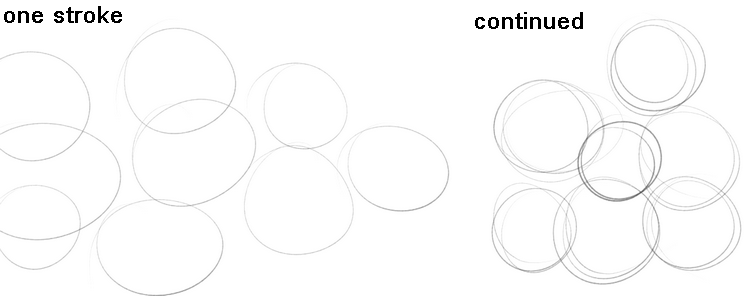
Now, while I wrote this whole process as though it happens in a linear fastion, it is in no ways linear (please see the first visual image I included in this post). It is messy, but it is also interconnected.:
newcanvas4

And eventually brings me back to feeling pretty good, but with a slightly different way of viewing the world.:
happiness-1

stenen-gestapeld