The Rejection Letter and Start to a New School Year

I’ve waited awhile before publishing this post.  Waiting seems to be the standard advice on the Internet if one Google’s “rejected journal manuscript”…wait a few days and then consider the feedback and keep working on the document.  That I did (and I’m keeping my fingers crossed for goodness from the new submission location!), although I waited longer to write this post.  Mostly because I was still mulling around some of feedback I received.  Additionally, it is hard to receive a rejection (This site indicates that there are four steps for responding to it…none of which apply to the kind of rejection I received).  In this case, I am talking about the rejection of a journal submission, but I think rejection is painful to receive not matter the context (at least this is what I recall from school dances). This post, however, will focus on the feedback I received about a research paper I wrote.

As you know from another post (where I confessed that a part of my motivation to blog is to improve my writing), writing does not come easily to me. I have to work at it, and while I have improved due to my continued commitment, I know that I need to keep doing it. So, this blog will not be about the feedback I received related to my writing abilities. Although I do want to add that I received three positive comments about my writing (woo hoo! 🙂 ). Instead, this feedback will be about two similar comments I received regarding the results of the research I was reporting.  Now, before I share more about the comments, please know that after spending time with them, I can see how the reviewers came to understand what I wrote in the way that they did. I actually agreed with what they wrote, and I believed that the research I was reporting did too, however, that is not what they read. Instead, they read that my research was incongruent with other, previously published research and they indicated that it should be rejected because of that, which is what got me thinking.  Again, please keep in mind that this was not the case, but I still couldn’t help but wonder what if I had made a new discovery that was not congruent with the previously published research?

What if my research discovered something different?

It was clear to me that if that had indeed been the case, the two reviewers were not open to it.  They did not even seem to notice that my research results section started off with a sentence indicating congruency (not opposition) to current research. So this got me thinking about what that might mean for the field of student affairs.

Are we so focused on what we’ve been doing that we have closed ourselves off to what is different and new?

This, to me, is a Thomas Kuhn question,

This video of Thomas Kuhn is hilarious: https://www.youtube.com/watch?v=H-v_onEWGv0

You should go here though to learn more about his contributions: http://www.theguardian.com/science/2012/aug/19/thomas-kuhn-structure-scientific-revolutions

and a question that I look forward to exploring with the students in College Student Personnel (CSP) program as a I start by fourth year as a faculty member tomorrow at Western Illinois University.

CSP_bigger

T.J. the barred owl

If you’ve checked out my Facebook page the past two summers, you might have noticed a few posts identifying someone/thing named T.J. T.J. has been an unexpected surprise. T.J. is who I dedicated this blog entry to, as it is my last entry for the summer. I will start only posting every other week from here on out throughout the school year (oh yes, it is that time of year again!).

My partner and I moved into our house two springs ago. It is an old, funky house that we are enjoying fixing up. Included is a yard, which at move-in time had several more trees in it than it has now. (I am quite grateful for an uncle and mom who don’t mind helping out a couple of new homeowner’s take down dead trees.)

IMG_0058

What the yard looked like when we purchased the house

IMG_0454

What the yard looks like now…or rather in April of this year

Last summer, prior to most of the tree removal, I was sitting outside one summer’s evening talking to a friend on the phone. It was closer to the dark part of dusk, but warm enough to sit comfortably outside. As I was sitting there, I happened to notice a large bird fly, and land, on the for sale sign across the street from where I was sitting. I said to my friend,

“I think that I there is an owl staring at me.”

Instinctively, I ducked down a bit (the neighbor’s yard was about 25 feet away, but it felt as though it was closer to five), but kept on talking. About 20 minutes later, I suddenly saw a huge bird fly within five feet of me (this time, I’m not exaggerating–I swear!) and land in one of the two dead trees that is no longer in our yard. I abruptly ended my phone conversation, and crouching down, quickly went inside my house where I proceeded to look for the owl out the window.

1004808_10101954032699658_68945488_n

The owl from the window…sorry it isn’t so clear

After a few minutes, the owl took off in flight again, which I would soon learn was just a quick trip to the top of our house. At that point, the owl started hooting. If you have never heard an owl hoot, they are much louder than you might think. This is a barred owl hooting:

https://www.youtube.com/watch?v=Id2A8yC_JJY

Naturally, in my frightened stage I decided to google “owls attacking humans”, which I DO NOT recommend. Yes, this does mean that there have been reports of owls attacking humans (mostly in the Northwest from what I saw, and mostly due to humans running in the dark), which results in a series of rabies shots.

No. Thank. You.

So, I called out to my partner and told him that we were not going outside as long as the owl was there. I was anxious with my tone and frantic in my eyes while expressing this thought to him. His response, from the couch:

“Okay.”

I asked him if he had seen the owl, and if he had heard it hooting. His response:

“No.”

Disappointed that he wasn’t as riled up about the owl as I was, I retreated to the other room where my computer was, and proceeded to update my Facebook status with the owl citing news (I posted the above photo I took out the window). It was at this point, that I started to realize if I refuse to go outside for fear of the owl, I would never get to enjoy another comfortable summer night on the patio. So, I decided to do the only wise thing a person with a doctorate in Counseling and Personnel Services would do…I used my counseling skills to name my fear! 🙂 And, that is how the barred owl living just outside our front door acquired the name T.J. (please don’t ask what T.J. stands for…I’m not really sure. The name just came to me as a good name for an owl).

T.J.

Update to this summer: T.J. is back, but this time there are three T.J.’s, and I certain that their home is in the grove of trees across the street in the neighbor’s yard. I have not heard much hooting, but instead have heard hissing. Yep, that is right, owl’s hiss. This is what a barred owl hissing sounds like:

https://www.youtube.com/watch?v=zHnU1fdLi_s

I’ve also gone one step further this year in applying my counseling skills. Not only do I still refer to the owl, well really all three of them, as T.J., but I’ve taken to watching them and talking to them using T.J.’s name (this way they learn it). Mostly, I just ask how things are going, and thank them for watching over everything.

IMG_0589

T.J., T.J., and T.J.

I will say that I am not alone in spotting the owl this year. I’ve seen many a neighbor note and point to the owls. Once I even had a couple stop me while I was sweeping, and ask me if I was aware of a “big bird” flying around. I kindly responded that I was, and that there were three barred owls that lived here (I really wanted to tell them that the owls names were T.J., but I resisted 🙂 ).

Innovation and Higher Education

Over the past week, I read the book The Innovator’s Dilemma by Clayton Christensen. I’d read several other books about what he calls disruptive innovation theory, but not yet this book, so I decided that it was time. I am one of those faculty members (I did this when I was a student affairs professional too) that enjoys reading a book from another field and considering what it means for the field of higher education. The book is worth reading, although the amount of discussion about the disk drive industry and innovations with in it made me feel quite old. For example, I can remember when disk drives served floppy disks that looked like this:
8-inch-floppy

And now disk drives serve disks that look like this:
SanDisk_Cruzer_Micro

One of the points, I’ve been spending some time with is that the cause of “every successful company’s ultimate demise” is,

“the two principles of good management taught in business schools: that you should always listen to and respond to the needs of your best customers, and that you should focus investments on those innovations that promise the highest returns” (p. xxxiv).

Although I am not a fan of likening higher education to a business in the manner that it is often done today (it seems such a narrow way of viewing a complex organization), I’m not one to fully throw out the entire idea. So, I’ve found it worthwhile to consider how these two principles of management are enacted in higher education…at least in relation to the experiences I’ve had.

The first principle, “that you should always listen to and respond to the needs of your best customers” I’ve most certainly heard within higher education. From time to time I also hear it from the students I teach.

“We must meet the students needs!”

The issue, for me, becomes do the students know what they need? For that matter, does anyone really know what they need? I know that I often think that I know what I need in the moment, but when looking back I more often see a much smaller list of necessary items than I originally put together. So, it seems that perhaps what we might be responding to are people’s wants disguised as needs. I also know that, from my experience, I can always need/want more. In fact, I’m not sure that I know too many people, myself included, that are quick to say, “no, no, that’s enough…I only needed that amount” of whatever it is that they are being given (hence my struggles with dieting).

Another issue I have with the principle, but again, one that I see being enacted in higher education has to do with responding “to the needs of your best customers”. I can certainly see how this can cause issues for any organization facing a disruptive innovation. After all, those that are not identified as your best customers, but that are still your customers, are not fully being considered. Thus, while they still might consume your product, they are being taken for granted. It doesn’t seem too far of a stretch to realize that when they find a place that will value their contributions more that they will go there. In a day and age when most institutions are facing retention issues this seems like a more high-risk way to keep students. In a day and age when higher education is being questioned about its purpose, this seems like a sure fire way to produce people who are dissatisfied and frustrated with their experience—especially if all that they have to do is glance around to see that the needs of others are being met.

The second principle, “that you should focus investments on those innovations that promise the highest returns” seems like a formula for stagnancy. After all, how do you know what the return rate of an innovation is if it hasn’t been put out to market? Furthermore, even if it has, and it is not showing a high return, perhaps that is simply because the right market has not been found (which means that it eventually will lead to a high return rate). So, while I can understand how it seems safe to focus on innovations one can anticipate will provide a high return, I can also understand why Christensen warns that,

“Experts’ forecasts will always be wrong” (p. 178).

Furthermore, what does this mean in terms of failure? Is it not okay for institutions of higher education to experience failure, which thus allows learning to occur? Is society okay with institutions of higher education failing? Imagine if such failures were approached primarily as learning opportunities instead of primarily as unacceptable. If it isn’t, I only see such practice teaching others that they must be perfect in all that they do, which seems incongruent with valuing the life-long learning, which is professed to be a purpose of higher education.

Perhaps enacting these principles, as I’ve experienced higher education do, means that a disruptive innovation is on the horizon for higher education.

On First Generation Students

I recently finished reading two books about First Generation college students (The First Generation Student Experience: Implications for Campus Practice, and Strategies for Improving Persistence and Success by Jeff Davis and First-Generation College Students: Understanding and Improving the Experience from Recruitment to Commencement by Lee Ward, Michael Siegel, and Zebulun Davenport). Each book was a fairly quick read, and both have been on my mind since completing them.

What was quite clear to me from both books (Davis’s book contained more personal narratives, and Ward et al.’s book discussed more institutional strategy) is that what is known about first generation students is that they are hard workers.

Hard workers.

I put it out there because I don’t hear a lot of folks in higher education talking about first generation students being hard workers. Rather, if first generation students are spoken about at all, I hear folks identifying things they usually need to “tell” first generation students so that they will “know it” and thus catch up them up to everyone else around them (I, myself, admit to having thought and spoken this way about first generation students). Yes, it is true that there are things that first generation college students might not know about how college works. But I worry a bit that we are missing out on what it is that they do know. Instead, we are too busy trying to fit them into the processes and structures we have in place, which only continues to encourage us to see first generation students as less than other students. The deficit model approach. So, I thought it might be helpful to post three (well, really four if you count what I noted above about first generation students being hard workers, which I most certainly do count) of the key points I read about first generation students that might help to counter such a common approach:

1. Focusing on creating learning environments in which students are shared what they will learn, how it contributes to the mission of the institution, and then have experiences aiming to reach those learning outcomes helps first generation students understand and get on board with the experiences they are participating in. (Incidentally, creating such environments assists non-first generation students too.)

2. First generation students are conscious of the opportunity they are receiving. This is not necessarily how either of the books discussed first generation students approach to their experiences. Instead, they discussed the “imposter phenomenon” and how first generation students are constantly questioning if they should be in college. I chose to re-frame it to highlight the awareness they have of the opportunity they are experiencing (which does include if they are deserving of it–my goal isn’t to leave that out) because in doing I hope to draw attention to the approach many non-first generation students take to their experience, which is more of a taken-for-grantedness.

3. There is no common definition of what it means to be a first generation student. Davis’s book discusses how this is a problem, and Ward et al.’s book selected a definition and used it throughout. I, however, think that there not being a common definition is an opportunity for first generation students to identify for themselves if this is an identity they have and what it means to them.

9780470474440_p0_v1_s260x420

first-generation-student-experience-implications-for-campus-practice-jeff-davis-paperback-cover-art

A Shakespearean-ish sonnet to the gods of writing

Inspired by my comprehensive exams (all three times), my dissertation, and my tenure requirements…

Today I’ll seek a power not of me.
For me, I pain, I whine, I see my fate.
I say so long as words are what need be
I can try positive thinking on as mate.

I know my success is much of energy and time.
Did not I write a phrase with clearness and prose?
An edit it needs, an erase, in order to rhyme.
A try this tweak, an idea, for how it grows.

A process for me, I want, I desire as smooth.
For writing I do, others said it needs some work.
So, I am fighting a voice, and hoping a groove,
Will find me before quit, and can’t, which lurk.

So long as I am doing my best and continue to try.
So long as I am striving this is my sigh.

note-to-self-writing

Considering Social Class in my Classroom Learning Environment

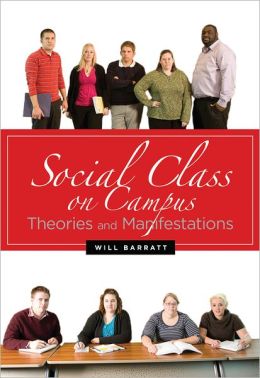
This morning I finished reading Social Class on Campus: Theories and Manifestations by Will Barrett. I purchased the book for several reasons.

9781579225728_p0_v1_s260x420

One, social class is an area I want to personally continue learning more about as I find myself noticing it more. I’m also considering incorporating a focus on it in the Internship 2 course that I teach, which currently contains a focus on chaos theory and disruptive innovation theory. I’ve been considering social class a disruptive “innovation” to higher education in my mind for the past few years, but am still wrapping my head around it so have not yet incorporated it into that course.

social-class-and-ecology

Second, the book contains personal narratives in the last chapter, and I’m always looking for such narratives to add to the courses I teach. I am of the belief that learning occurs best when it connects to lived experiences, and providing the lived experiences of others can sometimes help to build those connections. Perhaps not at all surprising is the challenge in actually finding such personal accounts in print. One of the points that the books contains is that valuing narratives of lived experiences is not often something valued by those in a higher social class–hence, a potential reason as to why I am always on the hunt. A final reason I selected the book was due to the structure in which it was written. Each chapter contains suggestions for activities, as well as discussion questions at the end. I value both of these as an educator for myself and others.

I gained a lot to “sit with” from the book, and would recommend it to others working within higher education. Social class isn’t necessarily one of those areas that gets a lot of attention directly, yet as I reflect on all of my experiences and conversations on college campuses (starting with the college search in high school) it is an ever present guiding force. This I’ve known, but continuing to learn more about it allows me to “see” it even more. As an undergraduate student, I recall being told by an administrator that it was refreshing to work with a student wearing flip flops and a ponytail, and similar, yet different, messages continue to be sent to me as a faculty member.

At one point in the book, Barrett discusses how students who are the co-creators of knowledge are more likely to reach self-authorship. Self-authorship in a very reduced definition is a way of making meaning in which an individual determines their own values and beliefs while seeing others’ views as important, separate, and worth considering (Important to note: Separate does not mean disconnected). This internal value and belief system enables individuals to consider experiences from multiple perspectives and make responsible, ethical decisions for the common good. Arguably, this is the goal of higher education.

Barrett draws the connection between types of pedagogy found in courses hosted at various institutions (discussion based, lecture style, etc.) and class. For example, a student who was able to attend a high school where discussion was valued in the classroom might seek out a college experience where the classroom experience is discussion based. He then draws the connection to those students being more likely to be self-authored. This was one point in the book where I found myself thinking two thoughts:

One, simply because something is discussion based does not mean that students are developing toward self-authorship. Baxter Magolda provides several examples of various ways, including lecture style learning environments, that promote self-authorship, and the key, according to her, is the incorporation of all principles and assumptions within in the learning partnerships model (a model designed specifically to promote the development of self-authorship). My own experience in higher education demonstrates that discussion based learning environments to do not inherently promote self-authorship, as it was not until my graduate education that I was asked to “situate learning in my own experience”, as well as experience being “validated as a knower”–the two principles missing from Barrett’s discussion about what is necessary to develop toward self-authorship. I engaged in discussion based classes at my own undergraduate institution, yet, I was rewarded for being able to argue/defend/repeat claims made by others about the field of study–not consider those claims in terms of my own lived experiences, which would have validated that I brought knowledge with me to the classroom.

The second thought I had was not to dismiss quickly the point Barrett was making. This got me thinking about the classroom experience I seek to provide, and the messages that are being sent about class. It is extra complicated when considering that,

“We all have a social class of origin, a current felt social class, and an attributed social class” (p. 7).

I’m still working on exactly where I land with the classroom environment I try to create (I just finished the book this morning!). I do know of at least three ways that I can be more inclusive, so that even if students are being taught cultural capital in a variety of ways throughout all of their experiences (this is a whole other blog post, and is really just one type of capital..it sure is complex stuff), they aren’t being asked to completely reject whatever cultural capital they do bring. So, here are my list of three:

1. Provide on my syllabus information about purchasing any books electronically. Often publishers allow for purchasing of hard copy and electronic copy with the electronic copy being less expensive. I’ve also already done this one, but want to keep doing it…work with the library to make sure that the assigned books for class can be checked out of the library.

2. Discuss class attire on the first day of class. Learning does not require business clothes. I look forward to seeing how this conversation goes this fall.

3. Continue to have library orientation and technology orientation involved in the Intro. class I teach. Continue also assisting students in learning APA style through a continual learning process, rather than provide a workshop and expect that they “get it” after the workshop.

Lake Vermilion Walks

I am the type of person who enjoys being outdoors….taking a walk, reading a book, writing a blog post…any time outside is rejuvenating. I do know, however, that it needs to be the kind of outside where I can enjoy nature. I really loved living right outside of DC for many reasons, but I don’t miss all of the buildings and the smell of car exhaust. I love the outdoors so much that I know that when I get extra crabby during the winter it is often because I haven’t been outside enough. One of my favorite parts about Macomb, Illinois, are the stars at night. I love taking a walk at night, especially during the winter when it is crisp and cold, and seeing all of the stars. It is something that just can’t be replicated in a city, and the calmness of the air helps me to put a lot of experiences in perspective. (If you ever make it to Macomb, IL, in the winter, I highly recommend taking a winter night walk :).)

Another place I enjoy spending time is on Lake Vermilion in Minnesota.
IMG_0544

I remember living in Maryland, and sharing with some of the folks there that I was going to spend my vacation in Northern Minnesota. The response I received was confusion. Why in the world would I go on vacation to Minnesota, and even more why would I go to Northern Minnesota? I suppose if I hadn’t moved around so much throughout my life, I might not understand their questions, but I do know that most people tend to explore the same places. In fact, I suppose that is part of the reason why I enjoy spending time on Lake Vermilion.

One of my favorite activities to do at Lake Vermilion actually doesn’t actually involve getting in the lake. Rather, I enjoy taking walks on the road that goes right along the lake. It is about a 6 mile hike (round trip) from the cabin I stay in to the end of the road.

IMG_0546
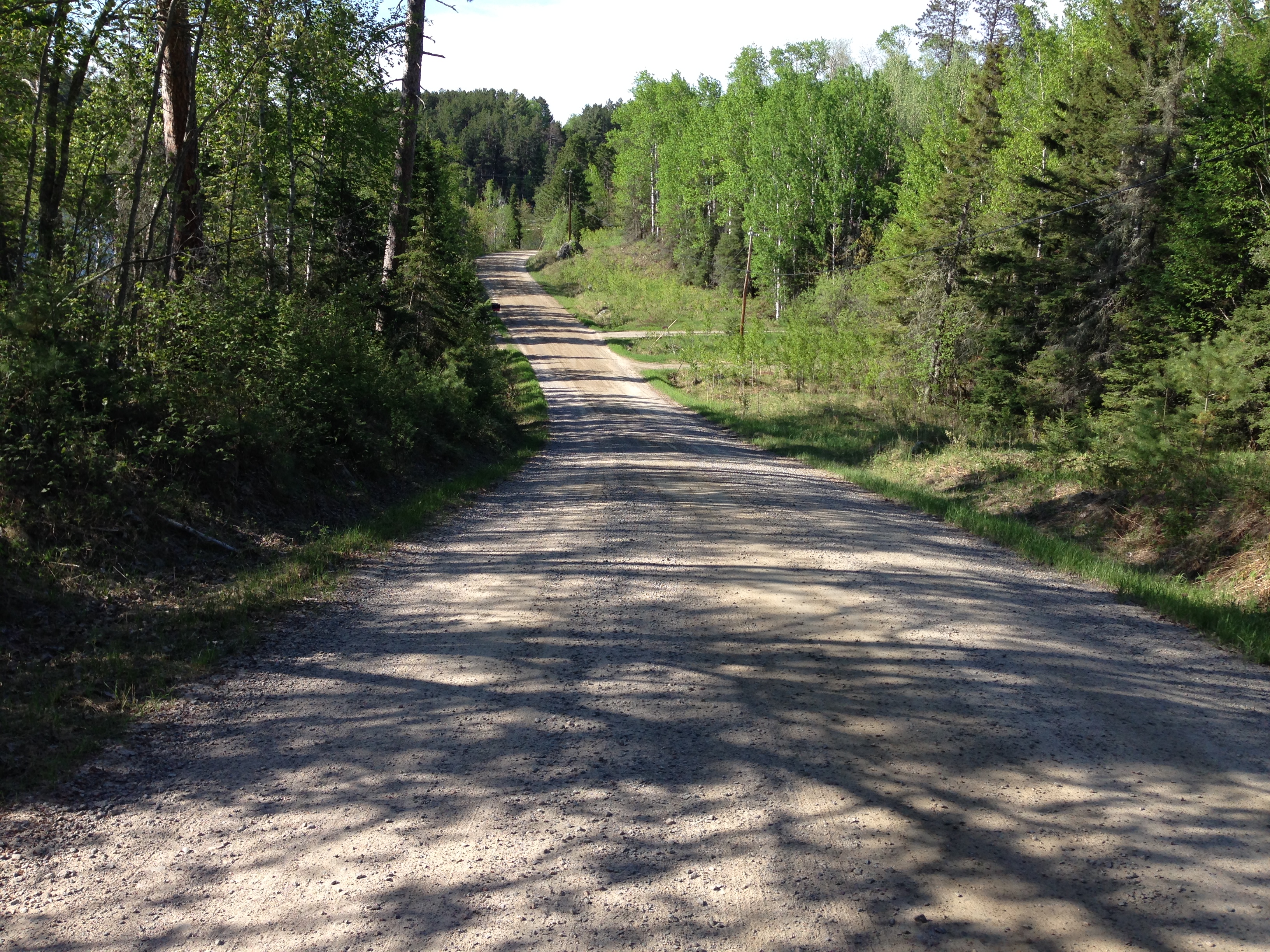
This is the beginning of the road.

And, I kid you not, it is uphill both ways. My mom and I joke about how it is a great butt workout.

IMG_0548
A hill (I swear it is a hill…I realize it might not look like much of a hill…my phone camera and non-existent camera skills don’t do it justice!)

IMG_0552
Another hill.

IMG_0550
Another hill.

IMG_0561
Even more hills.

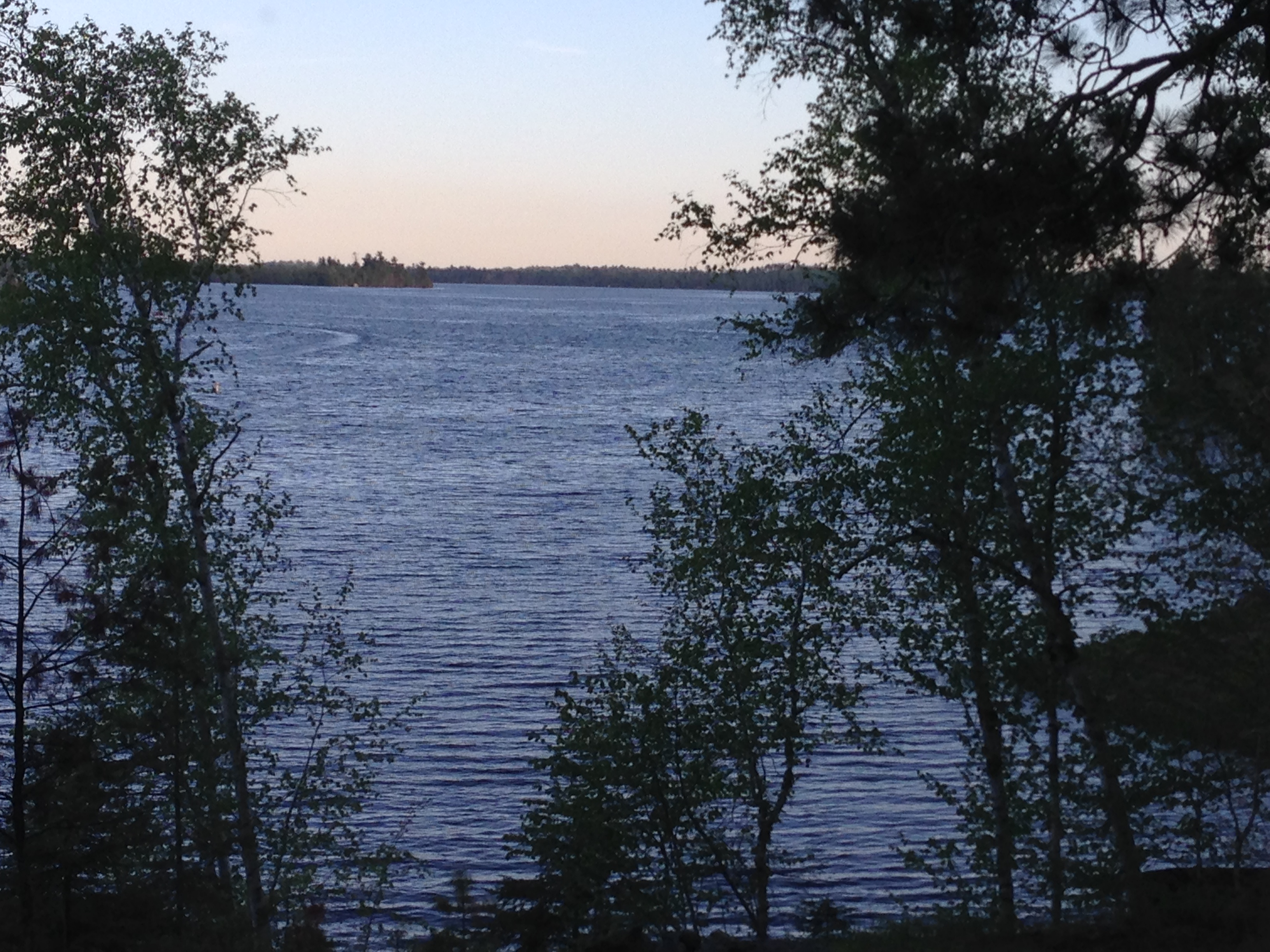
Occasionally, I will get it in my mind that I can run the distance, but I pretty much think I hike the hills no matter what, and really just run in between (I probably should also change the word run to jog :)). Oh, and there are beautiful lake side views to enjoy:

IMG_0554

IMG_0555

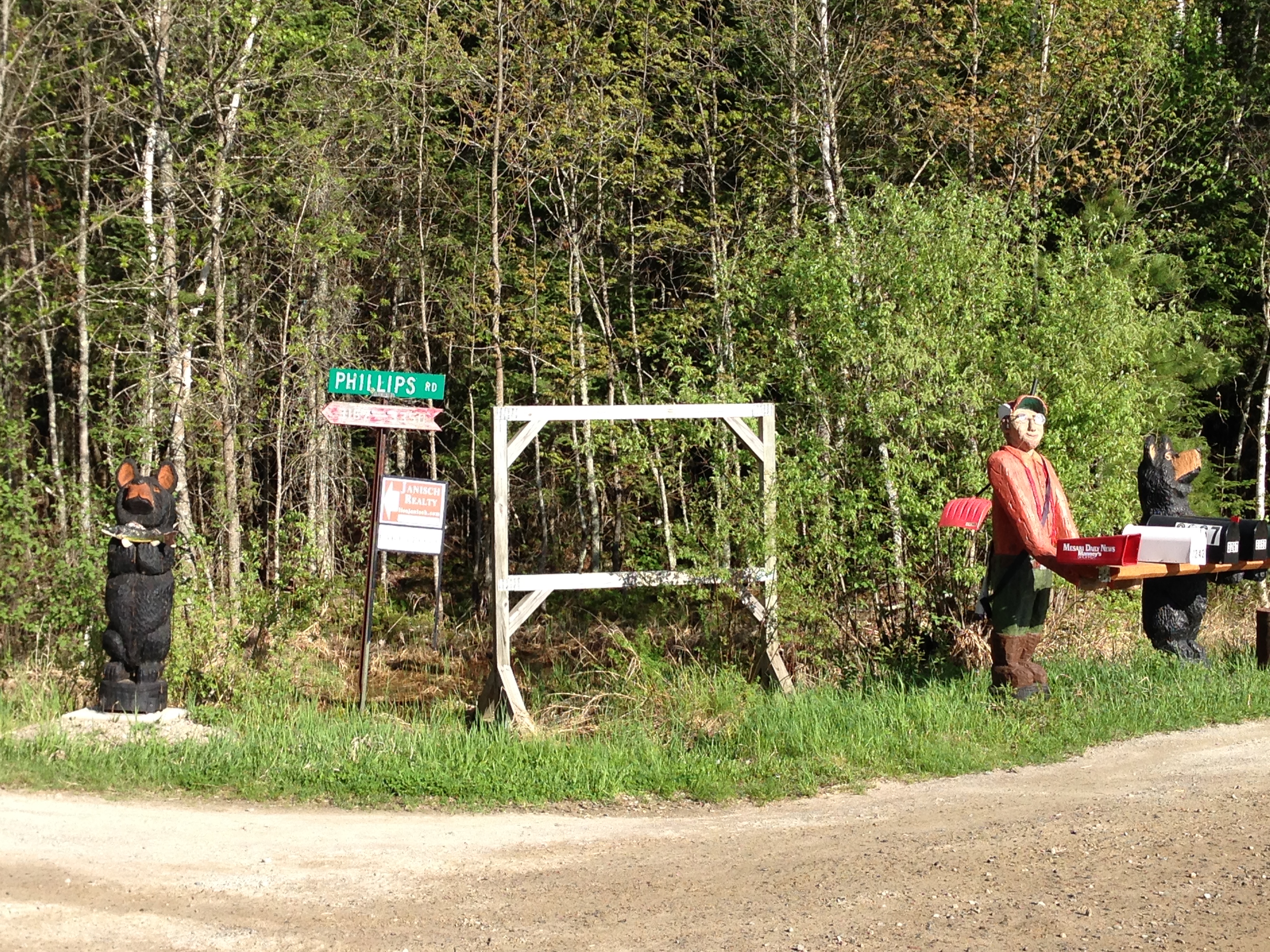
As well as humorous mailboxes:

IMG_0556

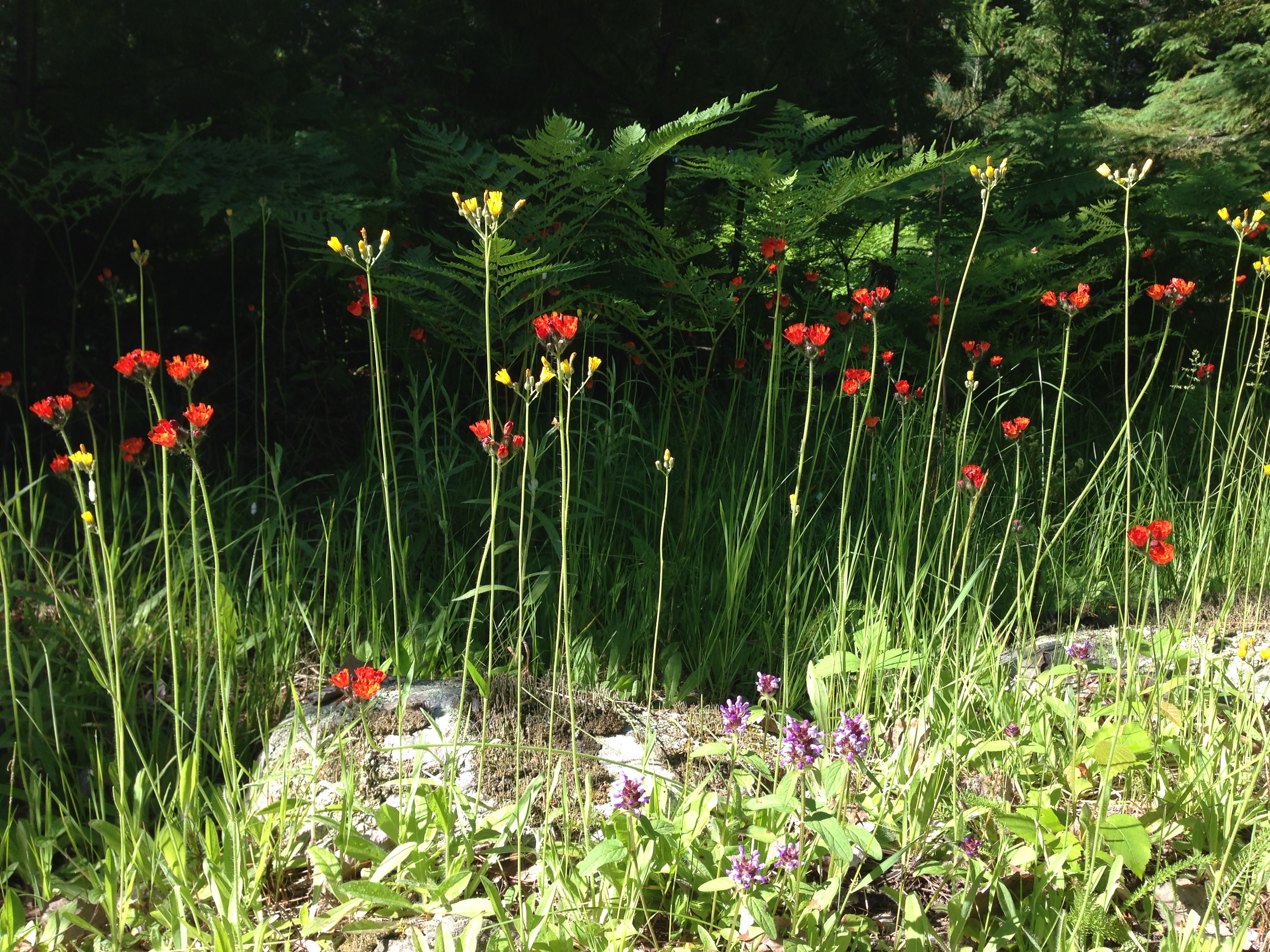
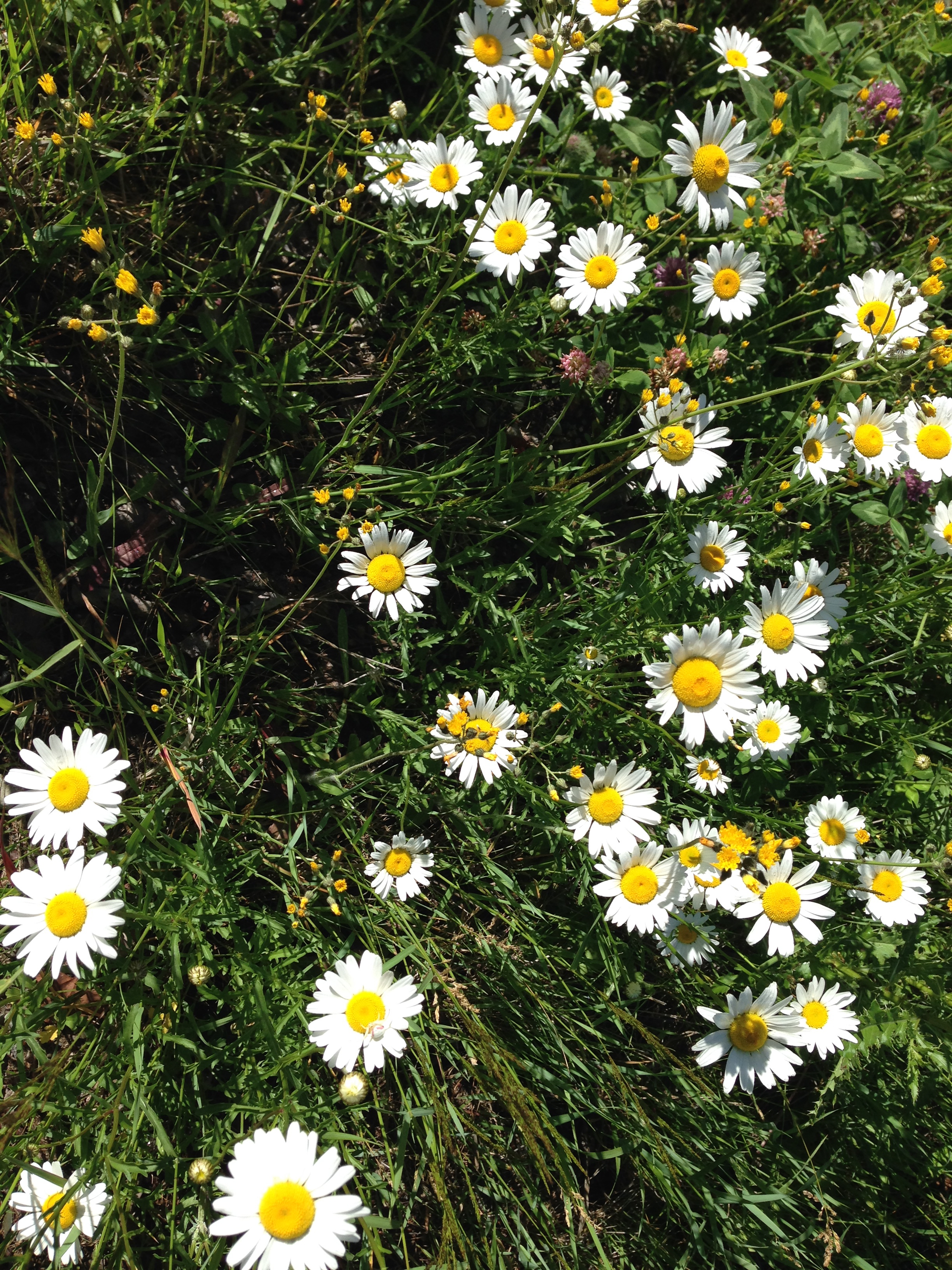
Besides the fresh air, I love looking at the forest and all of the wild flowers that grow under the trees. Some of my favorites are:

IMG_0616

IMG_0617

IMG_0618

Unfortunately, I’m not sure what any of them are called. I do know that if I was up here in later July or August, I would also find wild blueberries and raspberries. I was often told as a little girl to go pick wild berries when I said I was bored and/or there was nothing to do.

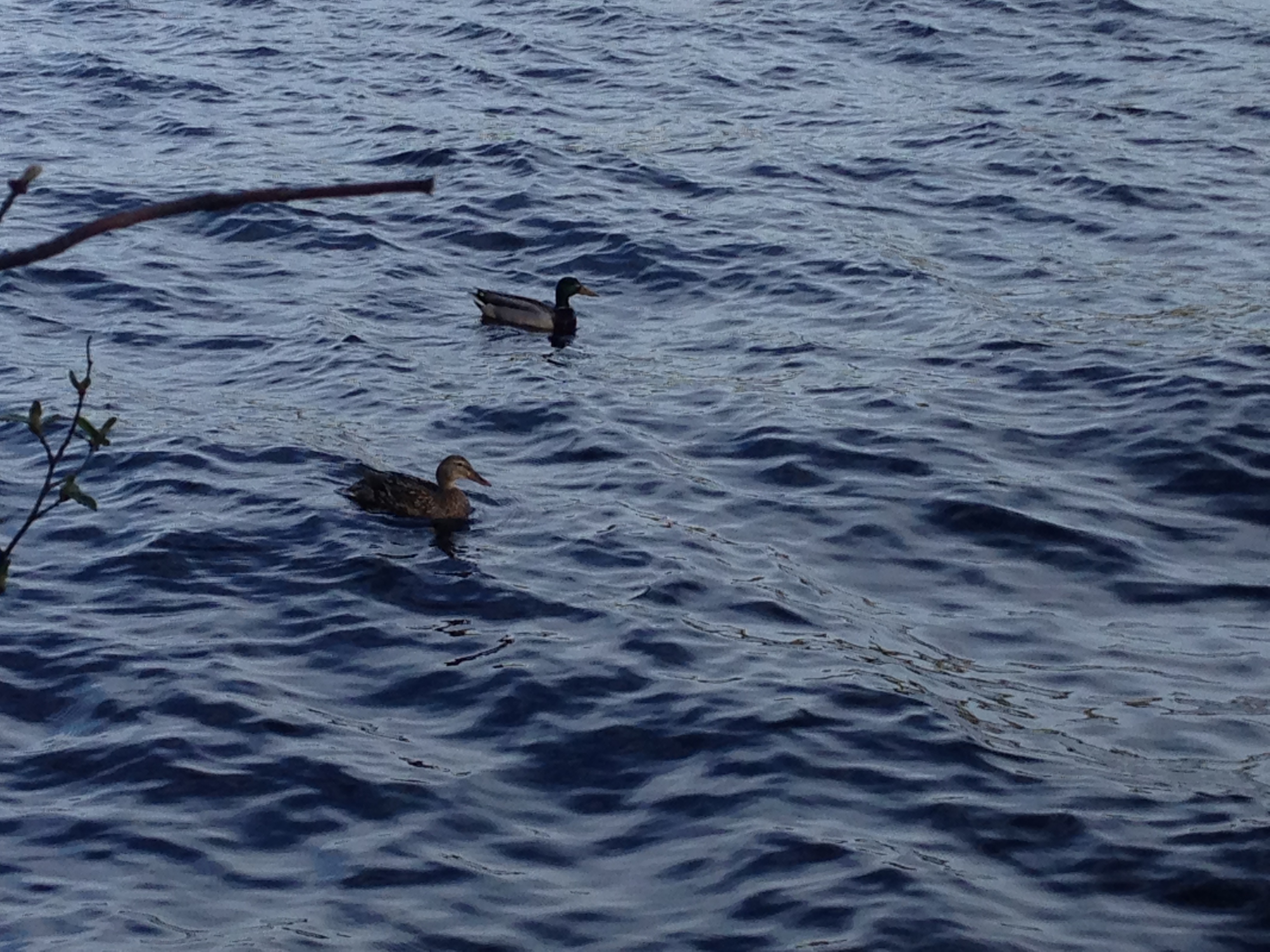
From time to time on my walks, I am also reminded that the forest is the permanent home of quite a few animals. So far this summer I’ve seen:

IMG_0615
deer (this is just one of several deer I’ve seen),

IMG_0538
ducks,

IMG_0620
a turtle (who always seems to want to be going to the other side of the road),

IMG_0560
and a fox.

I know that how I find calmness might not be the same as everyone else, and that is cool…Lake Vermilion walks wouldn’t be the same if they did. 🙂

Wouldn’t it be GREAT if Support Could Take Away the Challenge?

In student affairs, one of the “go to” standard responses (especially during the job interview process) when asked how one translates theory to practice is to provide challenge and support. The origin of this phrase in the field comes from Nevitt Sanford’s (1967) theory of challenge and support. I’m not always certain based on my experiences, however, that the theory translates over into the field exactly how it was designed. In fact, the more experiences I’ve had in the field the more I’ve found myself responding by asking the question, “what do you mean by that?” or “what does that look like?” when I hear someone say that they will “challenge and support the student.” I ask these questions because in my experience using challenge and support often looks like this:

Step one: Student finds a student affairs professional and says that they are overwhelmed/stressed/upset/not doing well with something.

Step two: Student affairs professional listens to the student and then helps the student figure out what to do about the problem. The help that is given to the student more often than not involves telling the student what steps they need to take.

Step three: Student follows the steps, or does not, and either the problem is solved or it is not (if it is not, and the student returns to the student affairs professional to discuss it again, or the student affairs professional hears from someone else that the student didn’t follow the steps they were told to follow, and discussion is often had about how it is the student’s fault for not “accepting the help” they were receiving…in other words, not doing what they had been told to do)

Step four: Student affairs professional feels good because the professional helped provide support for the student as the student was experiencing challenge.

I can’t help but wonder, however, if students are learning from such experiences what they should be learning from institutions of higher education. I’m also not sure that using challenge and support in this way is what Sanford intended… as I don’t really believe in the idea of using support to remove the challenge. I also don’t believe it is very helpful to create relationships with students where they are dependent on student affairs professionals to get the answers to their questions. Doing so often results in students repeatedly coming back to student affairs professionals to ask what they should be doing in a variety of situations, and student affairs professionals telling them how to address their issue (although this might make us feel popular/wanted as student affairs professionals, it has potential to result in quite a number of challenges for students upon graduation when they no longer have a student affairs professional to go to for all of the answers to the challenges they are experiencing). I’m not saying that students should be ignored when they seek out help, or be told to “figure it out” for themselves. Rather, I think we want students to learn to consider what they already know and how that might help them navigate through whatever experience they are being challenged by. Doing so, does not mean that students are alone in the process of navigating through whatever challenge they are experiencing, but rather it means that we partner with them. In other words, the support we provide is us being with them as they work through the challenge. I actually experienced such support this morning as I installed a ceiling fan.

Yes, challenge and support is applicable to all learning experiences…including installing ceiling fans. 🙂

This is the finished product:

IMG_0611

Yet, it almost didn’t become a finished product because I had reached a point of maximum frustration and impatience (lots of “this is stupid” and “why did I ever start this?” kinds of thoughts were occurring both in my mind, as well as being muttered under my breath). You see, I have learned just enough about changing out lights/fans/etc. that I am now the family member volunteered for such home improvement projects when visiting relatives. Given that I currently am visiting my sister, I was volunteered (and agruably I volunteeered myself, although I am hesitant to admit it given my most recent Sarah-as-an-electrician fan installation experience) because I wanted to do something nice for her (she is having surgery today, and I thought it would be nice to do something nice for her to experience when she returned home). I had most certainly reached a point where I just wanted to be told what to do by someone else to solve the problem of the switch not working after I thought I had done everything I should have done. So, reached out to my partner, John, and asked him to do just that. I even, in quite a sassy tone, told him that I didn’t know what to do and was done.

“I’m done. I quit. Just tell me what to do.”

Instead of responding by telling me what to do, he asked me to explain what steps I had taken. At first, I will admit, I was quite frustrated by this question. I didn’t want to tell him what I had done, I just wanted the switch to work!!!

Once I told him the steps I had taken, he asked me what I knew about why it might not be working. This led to us determining that perhaps the wiring wasn’t as straight forward as it appeared. In other words (this will make sense if you’ve ever done any electrical work) matching the black wire to the black wire, and the white wire to the white wire no matter how many times I did it was not going to provide different results (indeed, my continual repetitive trials of doing so were already proving this!).

At this point in time, I had calmed down enough that I started to consider again what might be going on. This time, however, John and I problem solved together, and the question of how we could figure it out was raised. This led to me getting on the internet and searching words that explained the experience I was having. At the same time, John thought that perhaps looking at the wire connection of a switch hook up in another room could help. Once we each did that, we discussed what steps we would take next and low and behold we got the switch working. (Hallelujah!)

Funny enough, John providing me with this kind of partnership, instead of just telling me what to do, has actually resulted in me feeling satisfied and motivated to install a second ceiling fan. While I shared this experience as an example of the kind of partnership that reflects a more complex way of providing challenge and support, and not one in which John used support to “solve” my challenge, it also illustrates the motivation and skill development that results from such partnering.

The next fan I will be replacing:

IMG_0612

(Yes, you are correct…that is a baseball fan ;))

Share a Story of an Intercultural Challenge

I presented a workshop last week, and one of the activities that I asked the participates to engage in has stayed with me since. The activity was to identify an intercultural challenge you’ve experienced and to share that story with a partner. The partner than tells you, the storyteller, what values they hear being communicated. Your job, as the storyteller, is to then stay open to hearing from your partner the values identified, and consider whether you meant for those to be the values shared.

So powerful.

Because of this activity, I’ve now been hearing the stories that I share with others, and considering the values being communicated. (I highly recommend trying this activity at home, although doing so, is quite challenging.)

viewer-23g97nm

The institute at which I presented this workshop was the Harbor Institute’s Cross Cultural Fraternal Advisors Institute in Atlanta Georgia (check it out and register for next year’s institute here: http://www.theharborinstitute.com/ccfai.asp and https://www.eventbrite.com/e/2015-cross-cultural-fraternal-advisors-institute-tickets-11972290443). It was the first time for the institute, which is the first time I’ve ever participated in the first go around of a conference/institute/etc that wasn’t something I was creating from my own professional role on a college campus. It was an intense, rewarding, learning experience to say the least. I am quite grateful for the opportunity I received.

An aside: I mentioned in my last blog that it was going to be my first time in Atlanta beyond the airport. Now I can confidently say that I’ve been to the Atlanta airport, and to the Marriott Marquis Downtown. At this rate, it appears as though Atlanta is going to be a city I get to know building by building each time I visit.

I do know, however, that I wasn’t really there to “see” Atlanta, but rather I was there to be a part of an experience unlike many others I’ve attended. My saying that makes it sound as though I was more conscious of what the experience would be like than I was, which isn’t true. Yes, I was aware of the two sessions I would be facilitating, but I wasn’t sure exactly how the overall experience would go. I think that some of my unawareness of the atmosphere of the institute has to do with how much time, or shall I say how little time, I’ve spend considering (beyond research that I’ve read and interacting with students) what it means for members of Culturally-Based Greek-Letter Organizations to be advised by someone like me. I certainly think about it much more now as a faculty member in a preparation program, but I’ve only been doing that for three years if I also give myself the two years prior to becoming faculty that brings my “considering what this means” up to five years total, which really is not that much given that I’ve been working in the field for going on 14 years. What I mean by someone like me, is someone who is a White woman that is a member of a National Panhellenic Council organization….the description of someone like me is the description of most fraternity and sorority life advisors at institutions across the country.

So important to realize
.

Seriously, I want to state again…I’ve spent minimal time given my professional career, beyond reading studies and various student interactions, considering what it means for Culturally-Based Greek-letter organizations to be advised by someone like me, and I don’t believe that I’m alone in that. I know that such organizations can often be the only place students feel welcome, especially at predominately White institutions, and I know some of the differences between my own organization and all other Greek-letter organizations. But I can see now how some of my own behaviors weren’t helping to successfully learn more about all of the organizations I was there to support, and I’ve come to this realization not just by participating in the advisors institute, but by engaging in the above storytelling activity I spoke about.

As a professional, I was hesitant to ask questions of the students because I was unsure if the language I was using was correct. I wanted Culturally-Based Greek-Letter Organizations to be at all of the same events that all the other Greek-Letter Organizations were at, even if I was asking the same four students over and over again to step up to the task, because I thought it would help them to feel included. I also though it would prove to others what Culturally-Based Greek-Letter organizations have to contribute. In essence, I was underestimating the students who joined Culturally-Based Greek-letter Organizations and I was placing on their experience my values of competition, community, and competence–without even realizing it! (This is not to say that Culturally-Based Greek-Letter Organizations don’t share these same values…but I had not asked). I was underestimating that they wouldn’t help me learn if I didn’t know the correct language to use, and I was setting up their worth as groups to be the same as other Greek-Letter Organizations as though all groups are the same. It is ironic to reflect back and see my behaviors and realize that they are connected to underestimating the students. One of my mentor’s once gave me advice, that I often still pass along to students, and that is to

“never underestimate the students”

yet, I can see how I was doing exactly that. Unfortunately, I can’t go back in time, and I don’t want to simply say that I will work to be more aware going forward. That sounds too simple. Too dismissive. I am grateful for my time at the institute this past week because it helped me to see how important it is to create spaces where such reflection can occur (including such reflection for myself) because it is through such reflection that true change can occur. I’m not sure that we do a good job of that as student affairs professionals. We blame time, energy, and other resources as to why we don’t spend time reflecting on the impact we have on our practice. Although all of those reasons maybe very true, I believe that we make time for the things we find important, and to be able to do that, we must see what we are currently viewing as important and determine if the values we are communicating and enacting are the values that we want to be communicating and enacting.

New Experiences

In one of the courses I teach, I include an assignment where the students are asked to have an experience on campus that they would not usually have, and then spend time reflecting on that experience, as well as considering what they’ve learned about themselves. The assignment is usually one of their favorites, and the students gain a lot of insight. Most of the students indicate that they are going to commit to having other such experiences because they see how much they learned just by attending and participating in a new experience. Unfortunately, making such a commitment doesn’t always result in actually participating in new experiences. I don’t think the students I teach are unlike most of the rest of us when it comes to new experiences. It is much easier to stay with what is comfortable and familiar. Yet, just as the students I teach discover, new experiences quite often lead to undiscovered insight.

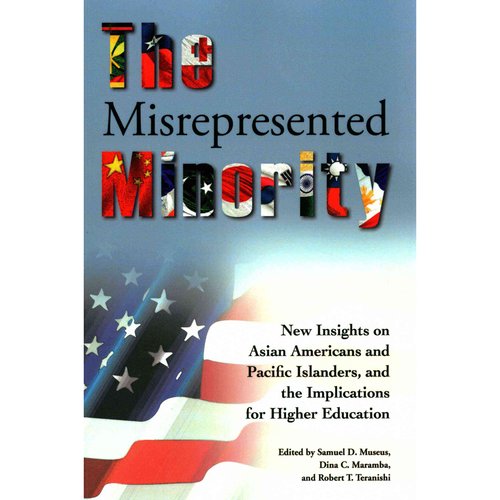
One could say that new experiences are always had when new books are read. To a degree, I can understand this perspective. However, there can be comfort and familiarity with books too. Certainly, it is important to deepen one’s learning about a topic, but perhaps the “newer” of the new experiences comes from reading about a completely new topic and/or reading authors who come from backgrounds unfamiliar to you. I’ve been having such a new experience lately, as I make my way through the book: The Misrepresented Minority.

The Misrepresented Minority

I actually selected the book because I knew that I would learn new information, and so far, it’s been great! The book is a series of chapters discussing the experience of various Asian American and Pacific Islander experiences at institutions of higher education. (SO important to know!) So many different experiences are shared, and in such vulnerable ways, that I feel my brain being stretched and curious to learn more. I’ve had no troubles reading the book, and often find myself wishing I had a conversation partner I could discuss it with. I do plan on using exerts from the book in various classes starting this fall, which I believe will greatly enhance the courses I teach.

Another new experience I am about to embark on is experiencing Atlanta, Georgia. I am presenting at the Cross Cultural Fraternal Advisors Institute, which is being held there.

CCAIft 2

The most I’ve ever experience Atlanta, is the airport, so this is most certainly a new experience. I admit that I’m a bit anxious, but I’m also excited. Hopefully I will discover some good food, and establish some new connections with colleagues.

What new experiences have you sought out recently?