Challenging Our Process

β€œWe [student affairs] are overly focused on outcomes and not process” (Jones, 2004, p. 4)

There are a lot of challenge competitions people can participate in going around. All one needs to do is check out Facebook to see a variety of them in diverse forms (pictures, lists, ice buckets, etc.). I’m sure that there is quite a bit of time and energy put into starting such challenges so that they become passed around to a lot of folks. I don’t really have those skills, nor the time to put into figuring that out. Still, though, I have a challenge to put out to the universe (specifically of student affairs) and I look forward to seeing what the universe does with it.

(hint: you could be the universe if you so feel up for the challenge πŸ™‚ ).

Challenge: Spend two weeks focusing on seeing the process of your practice.

I think that if we were to do so, we might be disappointed in ourselves. For example, we might see that often we speak about inclusivity, but we practice including only those most like us…at all levels. Or that we say we value difference, but our approach neutralizes out any difference…or assimilates it, so that the difference becomes something we are more comfortable with. I think that no matter what we do discover, it will include a disconnect between saying and doing (is it really a surprise then when students demonstrate the same disconnect?).

I could be wrong about this.

Taking the challenge could help to discover if I am, and I’m very much open to that.

I’m sure that there are lots of reasons too for such a disconnect. The structure of society, my own desire to idealize things, etc. Rationalizing our practice so that it stays the same is something we might discover that we are also quite good at, even though we talk about the need for change (one of those disconnects). Perhaps this means that we need a rule to go with the challenge:

Rule 1: No rationalizing/explaining away why you follow the process that you do. Just notice it as it is using thick, rich description…who does it include, what value(s) it is enacting, etc.

Oh, and this makes me think of:

Rule 2: No blaming other people or deciding things about/for them as you notice various processes you enact. This is about you looking at your practice.

Although I really do believe that we would discover disconnects, I also think that we would discover opportunities. A chance to find new ways to align our practice with the values we espouse, so that they become the values we enact.

Finally, because it seems like it wouldn’t be a challenge if it didn’t have a social media component. So, post the challenge to someone on FB to take, but when you do, share with them at least one value you are working to better have guide your practice.
accept

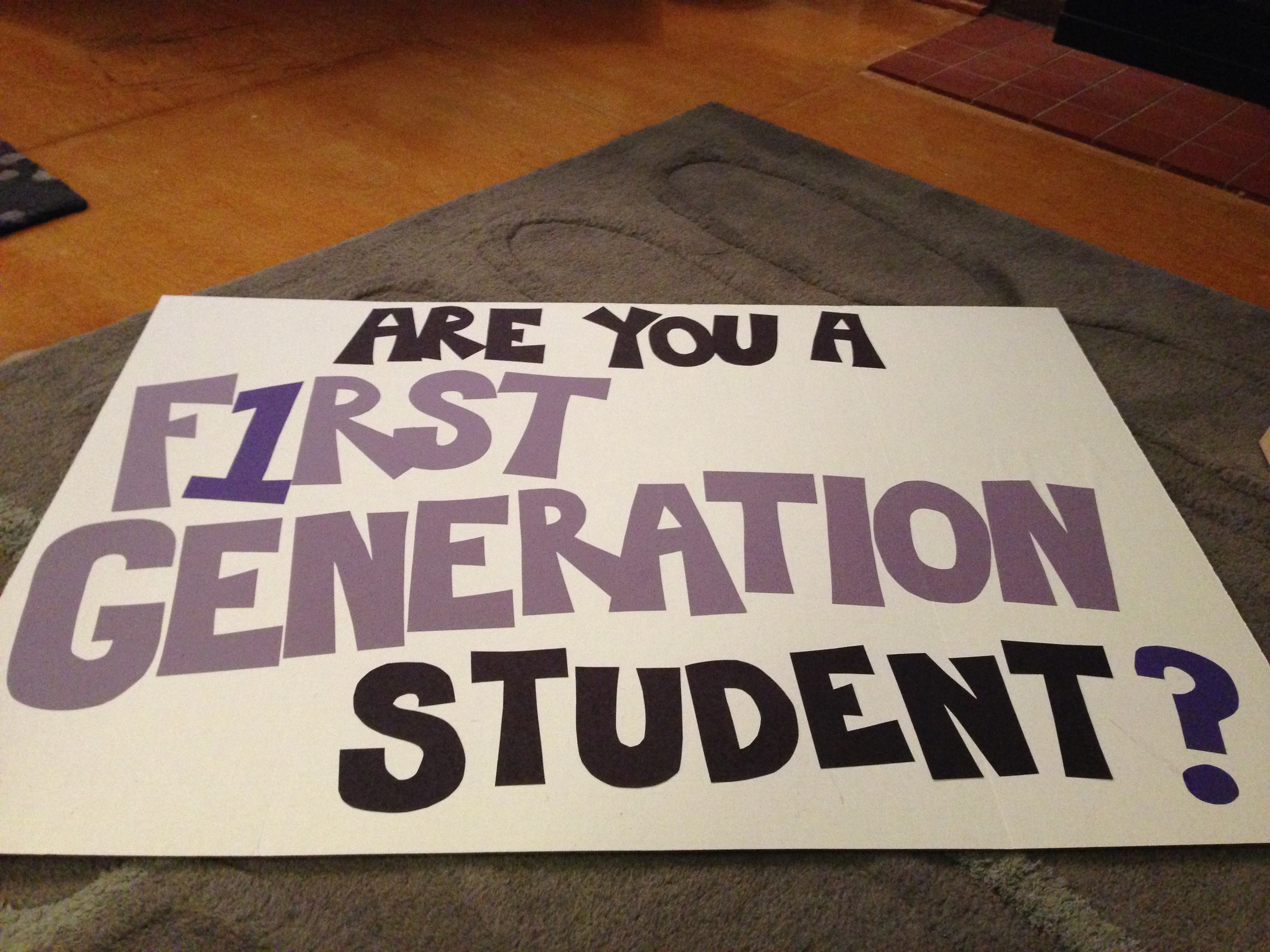
Starting a Student Organization for First Generation Students

photo

A few students within the College Student Personnel program at Western Illinois University and I have been meeting over the past few weeks to discuss (and put in motion) the creation of a student organization for First Generation students. This next week, on September 25, we will host our first interest meeting (Sept. 25, 5-6 p.m., Fox Room, University Union). How am I feeling about all of it?

I’m nervous and excited at the same time.

ann-williams-quote-they-were-a-little-nervous-but-mostly-excited

The idea for a student organization came to me when my student affairs background and research interest collided in my mind.

(I “grew up” in the student activities area…orientation, leadership, commuter affairs, fraternity and sorority life, etc.)
+
(transformative learning)
= First Generation Student Organization Idea

And the idea was affirmed the other night when I attended a speaker, President and CEO of the NIC, Pete Smithhisler, sponsored by the fraternity and sorority life community at WIU. As I sat there listening to Pete speak about courage, I could not help but consider the founders of my own organization, Pi Beta Phi. What it took for them to first decide to go to college, and then to start I.C. Sorosis. I can see how the structure the Pi Beta Phi founders modeled is the same structure the students and I are emulating as we work to get the first gen. group up and running. I also think the creation of both groups is somewhat similar…or at least comparable:

A group of students with similar identities coming together to form what in many ways is a family as they proceed through college together.

These similarities give me hope, as I reflect on Pete’s speech and how much good fraternities and sororities have made in the world. We want the student organization to do good. Yet, how it will is still to be determined. We want the students to contribute to the creation of the group around the following values:

Dedication
Grit
Curiosity
Community
Integrity

Still though, even with the identification of values, how they are enacted is left to be determined. We know we don’t want it to be like a class, and aren’t trying to become a bridge program. Such initiatives are worthwhile, but different than the aim of a student organization. We do hope to have first generation faculty and staff involved in some way, but that way is still to be figured out. So much is still left to be decided, but that’s a part of what makes me nervous and excited. Here’s hoping for a nice turn out next Thursday night…all are invited. πŸ™‚

Bl843mQCUAEgSPX

First Gen Flier

What Kind of Learner Are You?

Two years ago, I read Ken Bain’s book What the Best College Teachers Do after it was recommended to me by a colleague at a Lilly Conference, and last summer I re-read the book as a part of a book club on campus. I should clarify…I read the book in one day.

One day.

Not only was it an easy read, but it felt like Bain was speaking to me…telling me that I am not alone. Please don’t read that to mean that I think I’m one of the best college teachers. Rather, it was more confirmation that the types of learning experiences I try to provide within the classroom are congruent with what the best college teachers do…I just need to keep working at it.

The book was so powerful that last fall I decided to read his next book, What the Best College Students Do, with a student who was exploring the process of learning in the classroom. I completed this book feeling a bit disappointed. It felt as if the book was put together quickly, and that the effort to “discover” the best teachers was not the same effort to “discover” the best students (Bain claims otherwise). Instead, it felt more like he asked his friends/people he knew who he thought were good students to share their story about how they became good students. Let’s just say that I kept thinking that Bain and most of his friends/acquaintances have quite a few more resources for their own personal learning than most of the rest of us (certainly more than I have available).

Still, though, there was “good stuff” that could be found, and I’ve been spending time considering some of it at the beginning of this new school year and thought that it might be helpful for other to consider too. Bain discusses how he wasn’t equating being a “good student” with getting straight A’s. Most of the people he discusses in his book did get good grades, but not always. He spoke a bit about a test called the Force Concept Inventory, which demonstrated that those who received A grades were,

“simply better at memorizing formulas, plugging the right number into the equation, and calculating the correct answer on the exam” (p. 4463–kindle).

The A grade the students received had little to do with how well they understood course concepts. I agree with Ken’s critique of the grading system, and wish there was a way that I could avoid assigning grades. Unfortunately, my experience with various students leads me to believe that if grades were not offered not all students would do the work, and in order to help them discover a greater purpose for the course than simply getting an A, I find that I need them to do the work.

Bain also encourages readers to consider what kind of learner they are, and indicates that a person’s approach to learning is often connected to how they approach their work post graduation. Learning for the sake of learning or to become better by gaining new knowledge/understanding/skills/abilities is not how most students have been socialized to be students. Rather, I’ve experienced students who’ve been socialized to receive an A because they completed the homework and repeated back to me whatever it is that the reading assigned for the day said. My sassy response to these students is that I already know what the authors of the readings said because I assigned the readings. My non-sassy response is more…”okay, that’s a place to start. What do you think about the authors claims?” Psychologists at Goteborg University labeled these students as “surface” learners.

Bain discusses another kind of student that I’ve encountered. These students believe they can tell,

“right away if they are going to be good at something. If they don’t get it immediately, they throw up their hands and say, ‘I can’t do it'” (p. 4463–kindle).

Yet, most of us know that to lastingly learn something it requires time and commitment…progress is slow, and often involves continual struggle. In order to hang in there as one learns to become good at something, it requires internal motivation and knowing how one learns best. Thus, whatever you think right away about your ability to learn something might not be the best indicator of your abilities. Psychologists at Goteborg University label these students as “strategic” learners. These students, “focus almost exclusively on how to find out what the professor wants and how to ace the exam. If they learn something along the way that changes the way they think, act, or feel, that’s largely an accident. They never set out to do that” (p. 4463-kindle).

Bain also discusses characteristics of what he considers to be the “best” students. To Bain these students engage in deeper understanding through reflective questioning of their own mind. They are able to provide empathy to themselves as they acknowledge areas of growth and weakness. They often take it upon themselves to discover connections between their own interests and the assignments they received. “These students tried to comprehend what difference an idea, line of reasoning, or fact made, and how it related to something they had already learned” (p. 4463-kindle). Psychologists at Goteborg University labeled these students as “deep” learners.

Perhaps, like me, you were thinking about what category of student you fit in, and you might find that it has changed over time and due to context. I know that is the case for me. Bain discusses how you are not stuck in only being one type of learner for life, but that become a deep learner is often not what students have learned to become. Just spending time now considering how you approach learning has potential to assist you in becoming a deep learner. The choice is yours to make.

“To take a deep approach means to take control of your own education, to decide that you want to understand, to create something new, to search for the meaning that lies behind the text, to realize that words on a page are mere symbols, and that behind those symbols lies a meaning that has a connection with a thousand other aspects of your life and with your own personal development” (p. 4463-kindle).

4194VjE7VVL._SY344_BO1,204,203,200_
511BLV+JLuL._SY344_BO1,204,203,200_

The Rejection Letter and Start to a New School Year

I’ve waited awhile before publishing this post.  Waiting seems to be the standard advice on the Internet if one Google’s β€œrejected journal manuscript”…wait a few days and then consider the feedback and keep working on the document.  That I did (and I’m keeping my fingers crossed for goodness from the new submission location!), although I waited longer to write this post.  Mostly because I was still mulling around some of feedback I received.  Additionally, it is hard to receive a rejection (This site indicates that there are four steps for responding to it…none of which apply to the kind of rejection I received).  In this case, I am talking about the rejection of a journal submission, but I think rejection is painful to receive not matter the context (at least this is what I recall from school dances). This post, however, will focus on the feedback I received about a research paper I wrote.

As you know from another post (where I confessed that a part of my motivation to blog is to improve my writing), writing does not come easily to me. I have to work at it, and while I have improved due to my continued commitment, I know that I need to keep doing it. So, this blog will not be about the feedback I received related to my writing abilities. Although I do want to add that I received three positive comments about my writing (woo hoo! πŸ™‚ ). Instead, this feedback will be about two similar comments I received regarding the results of the research I was reporting.  Now, before I share more about the comments, please know that after spending time with them, I can see how the reviewers came to understand what I wrote in the way that they did. I actually agreed with what they wrote, and I believed that the research I was reporting did too, however, that is not what they read. Instead, they read that my research was incongruent with other, previously published research and they indicated that it should be rejected because of that, which is what got me thinking.  Again, please keep in mind that this was not the case, but I still couldn’t help but wonder what if I had made a new discovery that was not congruent with the previously published research?

What if my research discovered something different?

It was clear to me that if that had indeed been the case, the two reviewers were not open to it.  They did not even seem to notice that my research results section started off with a sentence indicating congruency (not opposition) to current research. So this got me thinking about what that might mean for the field of student affairs.

Are we so focused on what we’ve been doing that we have closed ourselves off to what is different and new?

This, to me, is a Thomas Kuhn question,

This video of Thomas Kuhn is hilarious: https://www.youtube.com/watch?v=H-v_onEWGv0

You should go here though to learn more about his contributions: http://www.theguardian.com/science/2012/aug/19/thomas-kuhn-structure-scientific-revolutions

and a question that I look forward to exploring with the students in College Student Personnel (CSP) program as a I start by fourth year as a faculty member tomorrow at Western Illinois University.

CSP_bigger

T.J. the barred owl

If you’ve checked out my Facebook page the past two summers, you might have noticed a few posts identifying someone/thing named T.J. T.J. has been an unexpected surprise. T.J. is who I dedicated this blog entry to, as it is my last entry for the summer. I will start only posting every other week from here on out throughout the school year (oh yes, it is that time of year again!).

My partner and I moved into our house two springs ago. It is an old, funky house that we are enjoying fixing up. Included is a yard, which at move-in time had several more trees in it than it has now. (I am quite grateful for an uncle and mom who don’t mind helping out a couple of new homeowner’s take down dead trees.)

IMG_0058

What the yard looked like when we purchased the house

IMG_0454

What the yard looks like now…or rather in April of this year

Last summer, prior to most of the tree removal, I was sitting outside one summer’s evening talking to a friend on the phone. It was closer to the dark part of dusk, but warm enough to sit comfortably outside. As I was sitting there, I happened to notice a large bird fly, and land, on the for sale sign across the street from where I was sitting. I said to my friend,

“I think that I there is an owl staring at me.”

Instinctively, I ducked down a bit (the neighbor’s yard was about 25 feet away, but it felt as though it was closer to five), but kept on talking. About 20 minutes later, I suddenly saw a huge bird fly within five feet of me (this time, I’m not exaggerating–I swear!) and land in one of the two dead trees that is no longer in our yard. I abruptly ended my phone conversation, and crouching down, quickly went inside my house where I proceeded to look for the owl out the window.

1004808_10101954032699658_68945488_n

The owl from the window…sorry it isn’t so clear

After a few minutes, the owl took off in flight again, which I would soon learn was just a quick trip to the top of our house. At that point, the owl started hooting. If you have never heard an owl hoot, they are much louder than you might think. This is a barred owl hooting:

https://www.youtube.com/watch?v=Id2A8yC_JJY

Naturally, in my frightened stage I decided to google “owls attacking humans”, which I DO NOT recommend. Yes, this does mean that there have been reports of owls attacking humans (mostly in the Northwest from what I saw, and mostly due to humans running in the dark), which results in a series of rabies shots.

No. Thank. You.

So, I called out to my partner and told him that we were not going outside as long as the owl was there. I was anxious with my tone and frantic in my eyes while expressing this thought to him. His response, from the couch:

“Okay.”

I asked him if he had seen the owl, and if he had heard it hooting. His response:

“No.”

Disappointed that he wasn’t as riled up about the owl as I was, I retreated to the other room where my computer was, and proceeded to update my Facebook status with the owl citing news (I posted the above photo I took out the window). It was at this point, that I started to realize if I refuse to go outside for fear of the owl, I would never get to enjoy another comfortable summer night on the patio. So, I decided to do the only wise thing a person with a doctorate in Counseling and Personnel Services would do…I used my counseling skills to name my fear! πŸ™‚ And, that is how the barred owl living just outside our front door acquired the name T.J. (please don’t ask what T.J. stands for…I’m not really sure. The name just came to me as a good name for an owl).

T.J.

Update to this summer: T.J. is back, but this time there are three T.J.’s, and I certain that their home is in the grove of trees across the street in the neighbor’s yard. I have not heard much hooting, but instead have heard hissing. Yep, that is right, owl’s hiss. This is what a barred owl hissing sounds like:

https://www.youtube.com/watch?v=zHnU1fdLi_s

I’ve also gone one step further this year in applying my counseling skills. Not only do I still refer to the owl, well really all three of them, as T.J., but I’ve taken to watching them and talking to them using T.J.’s name (this way they learn it). Mostly, I just ask how things are going, and thank them for watching over everything.

IMG_0589

T.J., T.J., and T.J.

I will say that I am not alone in spotting the owl this year. I’ve seen many a neighbor note and point to the owls. Once I even had a couple stop me while I was sweeping, and ask me if I was aware of a “big bird” flying around. I kindly responded that I was, and that there were three barred owls that lived here (I really wanted to tell them that the owls names were T.J., but I resisted πŸ™‚ ).

Innovation and Higher Education

Over the past week, I read the book The Innovator’s Dilemma by Clayton Christensen. I’d read several other books about what he calls disruptive innovation theory, but not yet this book, so I decided that it was time. I am one of those faculty members (I did this when I was a student affairs professional too) that enjoys reading a book from another field and considering what it means for the field of higher education. The book is worth reading, although the amount of discussion about the disk drive industry and innovations with in it made me feel quite old. For example, I can remember when disk drives served floppy disks that looked like this:
8-inch-floppy

And now disk drives serve disks that look like this:
SanDisk_Cruzer_Micro

One of the points, I’ve been spending some time with is that the cause of β€œevery successful company’s ultimate demise” is,

β€œthe two principles of good management taught in business schools: that you should always listen to and respond to the needs of your best customers, and that you should focus investments on those innovations that promise the highest returns” (p. xxxiv).

Although I am not a fan of likening higher education to a business in the manner that it is often done today (it seems such a narrow way of viewing a complex organization), I’m not one to fully throw out the entire idea. So, I’ve found it worthwhile to consider how these two principles of management are enacted in higher education…at least in relation to the experiences I’ve had.

The first principle, β€œthat you should always listen to and respond to the needs of your best customers” I’ve most certainly heard within higher education. From time to time I also hear it from the students I teach.

β€œWe must meet the students needs!”

The issue, for me, becomes do the students know what they need? For that matter, does anyone really know what they need? I know that I often think that I know what I need in the moment, but when looking back I more often see a much smaller list of necessary items than I originally put together. So, it seems that perhaps what we might be responding to are people’s wants disguised as needs. I also know that, from my experience, I can always need/want more. In fact, I’m not sure that I know too many people, myself included, that are quick to say, β€œno, no, that’s enough…I only needed that amount” of whatever it is that they are being given (hence my struggles with dieting).

Another issue I have with the principle, but again, one that I see being enacted in higher education has to do with responding β€œto the needs of your best customers”. I can certainly see how this can cause issues for any organization facing a disruptive innovation. After all, those that are not identified as your best customers, but that are still your customers, are not fully being considered. Thus, while they still might consume your product, they are being taken for granted. It doesn’t seem too far of a stretch to realize that when they find a place that will value their contributions more that they will go there. In a day and age when most institutions are facing retention issues this seems like a more high-risk way to keep students. In a day and age when higher education is being questioned about its purpose, this seems like a sure fire way to produce people who are dissatisfied and frustrated with their experienceβ€”especially if all that they have to do is glance around to see that the needs of others are being met.

The second principle, β€œthat you should focus investments on those innovations that promise the highest returns” seems like a formula for stagnancy. After all, how do you know what the return rate of an innovation is if it hasn’t been put out to market? Furthermore, even if it has, and it is not showing a high return, perhaps that is simply because the right market has not been found (which means that it eventually will lead to a high return rate). So, while I can understand how it seems safe to focus on innovations one can anticipate will provide a high return, I can also understand why Christensen warns that,

β€œExperts’ forecasts will always be wrong” (p. 178).

Furthermore, what does this mean in terms of failure? Is it not okay for institutions of higher education to experience failure, which thus allows learning to occur? Is society okay with institutions of higher education failing? Imagine if such failures were approached primarily as learning opportunities instead of primarily as unacceptable. If it isn’t, I only see such practice teaching others that they must be perfect in all that they do, which seems incongruent with valuing the life-long learning, which is professed to be a purpose of higher education.

Perhaps enacting these principles, as I’ve experienced higher education do, means that a disruptive innovation is on the horizon for higher education.

On First Generation Students

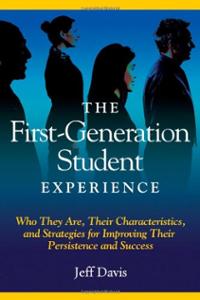
I recently finished reading two books about First Generation college students (The First Generation Student Experience: Implications for Campus Practice, and Strategies for Improving Persistence and Success by Jeff Davis and First-Generation College Students: Understanding and Improving the Experience from Recruitment to Commencement by Lee Ward, Michael Siegel, and Zebulun Davenport). Each book was a fairly quick read, and both have been on my mind since completing them.

What was quite clear to me from both books (Davis’s book contained more personal narratives, and Ward et al.’s book discussed more institutional strategy) is that what is known about first generation students is that they are hard workers.

Hard workers.

I put it out there because I don’t hear a lot of folks in higher education talking about first generation students being hard workers. Rather, if first generation students are spoken about at all, I hear folks identifying things they usually need to “tell” first generation students so that they will “know it” and thus catch up them up to everyone else around them (I, myself, admit to having thought and spoken this way about first generation students). Yes, it is true that there are things that first generation college students might not know about how college works. But I worry a bit that we are missing out on what it is that they do know. Instead, we are too busy trying to fit them into the processes and structures we have in place, which only continues to encourage us to see first generation students as less than other students. The deficit model approach. So, I thought it might be helpful to post three (well, really four if you count what I noted above about first generation students being hard workers, which I most certainly do count) of the key points I read about first generation students that might help to counter such a common approach:

1. Focusing on creating learning environments in which students are shared what they will learn, how it contributes to the mission of the institution, and then have experiences aiming to reach those learning outcomes helps first generation students understand and get on board with the experiences they are participating in. (Incidentally, creating such environments assists non-first generation students too.)

2. First generation students are conscious of the opportunity they are receiving. This is not necessarily how either of the books discussed first generation students approach to their experiences. Instead, they discussed the “imposter phenomenon” and how first generation students are constantly questioning if they should be in college. I chose to re-frame it to highlight the awareness they have of the opportunity they are experiencing (which does include if they are deserving of it–my goal isn’t to leave that out) because in doing I hope to draw attention to the approach many non-first generation students take to their experience, which is more of a taken-for-grantedness.

3. There is no common definition of what it means to be a first generation student. Davis’s book discusses how this is a problem, and Ward et al.’s book selected a definition and used it throughout. I, however, think that there not being a common definition is an opportunity for first generation students to identify for themselves if this is an identity they have and what it means to them.

9780470474440_p0_v1_s260x420

first-generation-student-experience-implications-for-campus-practice-jeff-davis-paperback-cover-art

A Shakespearean-ish sonnet to the gods of writing

Inspired by my comprehensive exams (all three times), my dissertation, and my tenure requirements…

Today I’ll seek a power not of me.
For me, I pain, I whine, I see my fate.
I say so long as words are what need be
I can try positive thinking on as mate.

I know my success is much of energy and time.
Did not I write a phrase with clearness and prose?
An edit it needs, an erase, in order to rhyme.
A try this tweak, an idea, for how it grows.

A process for me, I want, I desire as smooth.
For writing I do, others said it needs some work.
So, I am fighting a voice, and hoping a groove,
Will find me before quit, and can’t, which lurk.

So long as I am doing my best and continue to try.
So long as I am striving this is my sigh.

note-to-self-writing

Considering Social Class in my Classroom Learning Environment

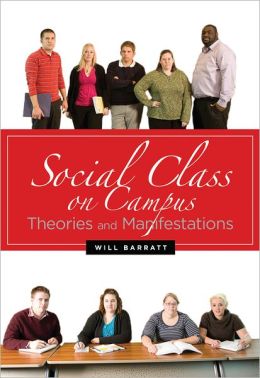
This morning I finished reading Social Class on Campus: Theories and Manifestations by Will Barrett. I purchased the book for several reasons.

9781579225728_p0_v1_s260x420

One, social class is an area I want to personally continue learning more about as I find myself noticing it more. I’m also considering incorporating a focus on it in the Internship 2 course that I teach, which currently contains a focus on chaos theory and disruptive innovation theory. I’ve been considering social class a disruptive “innovation” to higher education in my mind for the past few years, but am still wrapping my head around it so have not yet incorporated it into that course.

social-class-and-ecology

Second, the book contains personal narratives in the last chapter, and I’m always looking for such narratives to add to the courses I teach. I am of the belief that learning occurs best when it connects to lived experiences, and providing the lived experiences of others can sometimes help to build those connections. Perhaps not at all surprising is the challenge in actually finding such personal accounts in print. One of the points that the books contains is that valuing narratives of lived experiences is not often something valued by those in a higher social class–hence, a potential reason as to why I am always on the hunt. A final reason I selected the book was due to the structure in which it was written. Each chapter contains suggestions for activities, as well as discussion questions at the end. I value both of these as an educator for myself and others.

I gained a lot to “sit with” from the book, and would recommend it to others working within higher education. Social class isn’t necessarily one of those areas that gets a lot of attention directly, yet as I reflect on all of my experiences and conversations on college campuses (starting with the college search in high school) it is an ever present guiding force. This I’ve known, but continuing to learn more about it allows me to “see” it even more. As an undergraduate student, I recall being told by an administrator that it was refreshing to work with a student wearing flip flops and a ponytail, and similar, yet different, messages continue to be sent to me as a faculty member.

At one point in the book, Barrett discusses how students who are the co-creators of knowledge are more likely to reach self-authorship. Self-authorship in a very reduced definition is a way of making meaning in which an individual determines their own values and beliefs while seeing others’ views as important, separate, and worth considering (Important to note: Separate does not mean disconnected). This internal value and belief system enables individuals to consider experiences from multiple perspectives and make responsible, ethical decisions for the common good. Arguably, this is the goal of higher education.

Barrett draws the connection between types of pedagogy found in courses hosted at various institutions (discussion based, lecture style, etc.) and class. For example, a student who was able to attend a high school where discussion was valued in the classroom might seek out a college experience where the classroom experience is discussion based. He then draws the connection to those students being more likely to be self-authored. This was one point in the book where I found myself thinking two thoughts:

One, simply because something is discussion based does not mean that students are developing toward self-authorship. Baxter Magolda provides several examples of various ways, including lecture style learning environments, that promote self-authorship, and the key, according to her, is the incorporation of all principles and assumptions within in the learning partnerships model (a model designed specifically to promote the development of self-authorship). My own experience in higher education demonstrates that discussion based learning environments to do not inherently promote self-authorship, as it was not until my graduate education that I was asked to “situate learning in my own experience”, as well as experience being “validated as a knower”–the two principles missing from Barrett’s discussion about what is necessary to develop toward self-authorship. I engaged in discussion based classes at my own undergraduate institution, yet, I was rewarded for being able to argue/defend/repeat claims made by others about the field of study–not consider those claims in terms of my own lived experiences, which would have validated that I brought knowledge with me to the classroom.

The second thought I had was not to dismiss quickly the point Barrett was making. This got me thinking about the classroom experience I seek to provide, and the messages that are being sent about class. It is extra complicated when considering that,

“We all have a social class of origin, a current felt social class, and an attributed social class” (p. 7).

I’m still working on exactly where I land with the classroom environment I try to create (I just finished the book this morning!). I do know of at least three ways that I can be more inclusive, so that even if students are being taught cultural capital in a variety of ways throughout all of their experiences (this is a whole other blog post, and is really just one type of capital..it sure is complex stuff), they aren’t being asked to completely reject whatever cultural capital they do bring. So, here are my list of three:

1. Provide on my syllabus information about purchasing any books electronically. Often publishers allow for purchasing of hard copy and electronic copy with the electronic copy being less expensive. I’ve also already done this one, but want to keep doing it…work with the library to make sure that the assigned books for class can be checked out of the library.

2. Discuss class attire on the first day of class. Learning does not require business clothes. I look forward to seeing how this conversation goes this fall.

3. Continue to have library orientation and technology orientation involved in the Intro. class I teach. Continue also assisting students in learning APA style through a continual learning process, rather than provide a workshop and expect that they “get it” after the workshop.

Lake Vermilion Walks

I am the type of person who enjoys being outdoors….taking a walk, reading a book, writing a blog post…any time outside is rejuvenating. I do know, however, that it needs to be the kind of outside where I can enjoy nature. I really loved living right outside of DC for many reasons, but I don’t miss all of the buildings and the smell of car exhaust. I love the outdoors so much that I know that when I get extra crabby during the winter it is often because I haven’t been outside enough. One of my favorite parts about Macomb, Illinois, are the stars at night. I love taking a walk at night, especially during the winter when it is crisp and cold, and seeing all of the stars. It is something that just can’t be replicated in a city, and the calmness of the air helps me to put a lot of experiences in perspective. (If you ever make it to Macomb, IL, in the winter, I highly recommend taking a winter night walk :).)

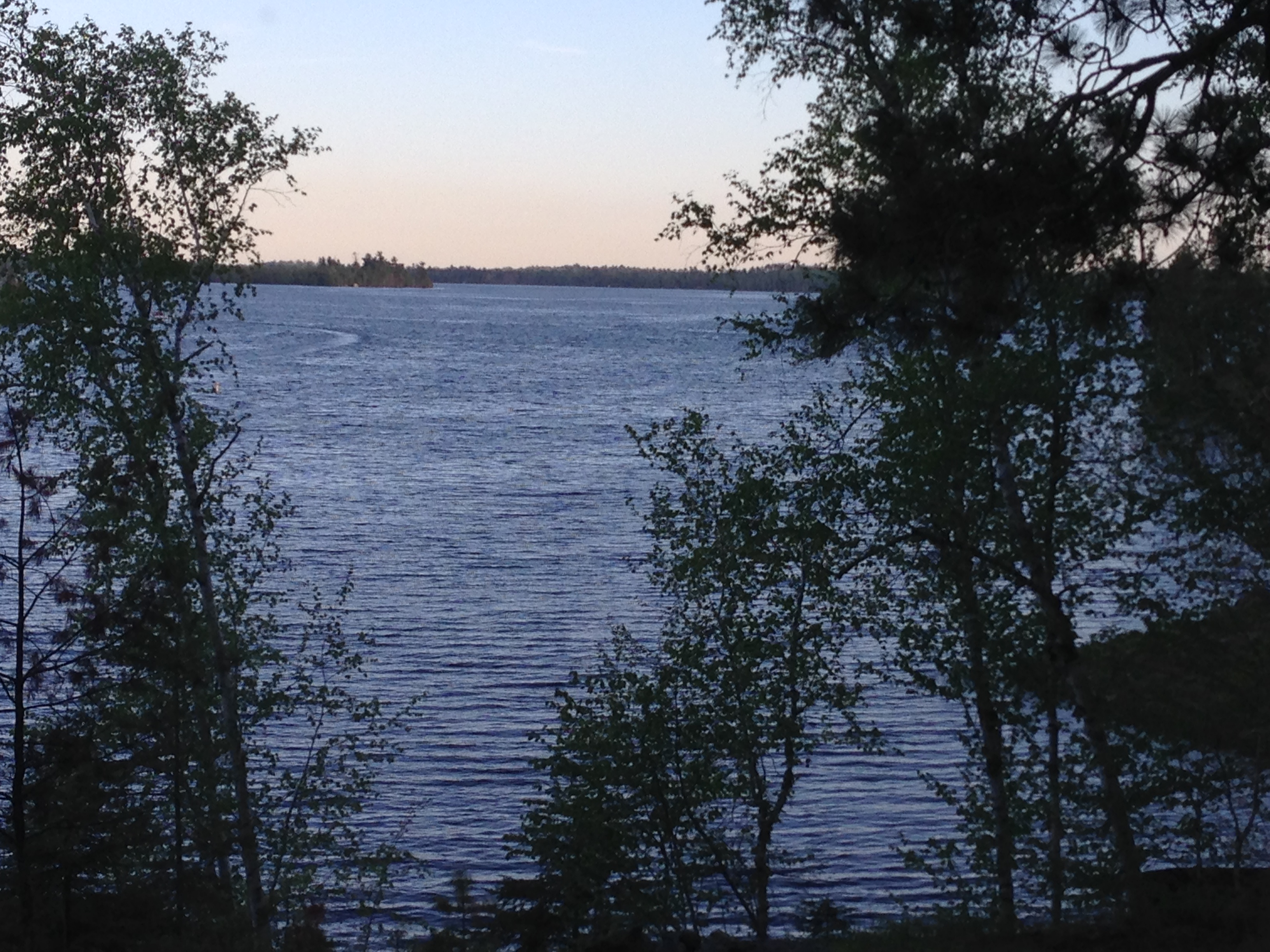
Another place I enjoy spending time is on Lake Vermilion in Minnesota.
IMG_0544

I remember living in Maryland, and sharing with some of the folks there that I was going to spend my vacation in Northern Minnesota. The response I received was confusion. Why in the world would I go on vacation to Minnesota, and even more why would I go to Northern Minnesota? I suppose if I hadn’t moved around so much throughout my life, I might not understand their questions, but I do know that most people tend to explore the same places. In fact, I suppose that is part of the reason why I enjoy spending time on Lake Vermilion.

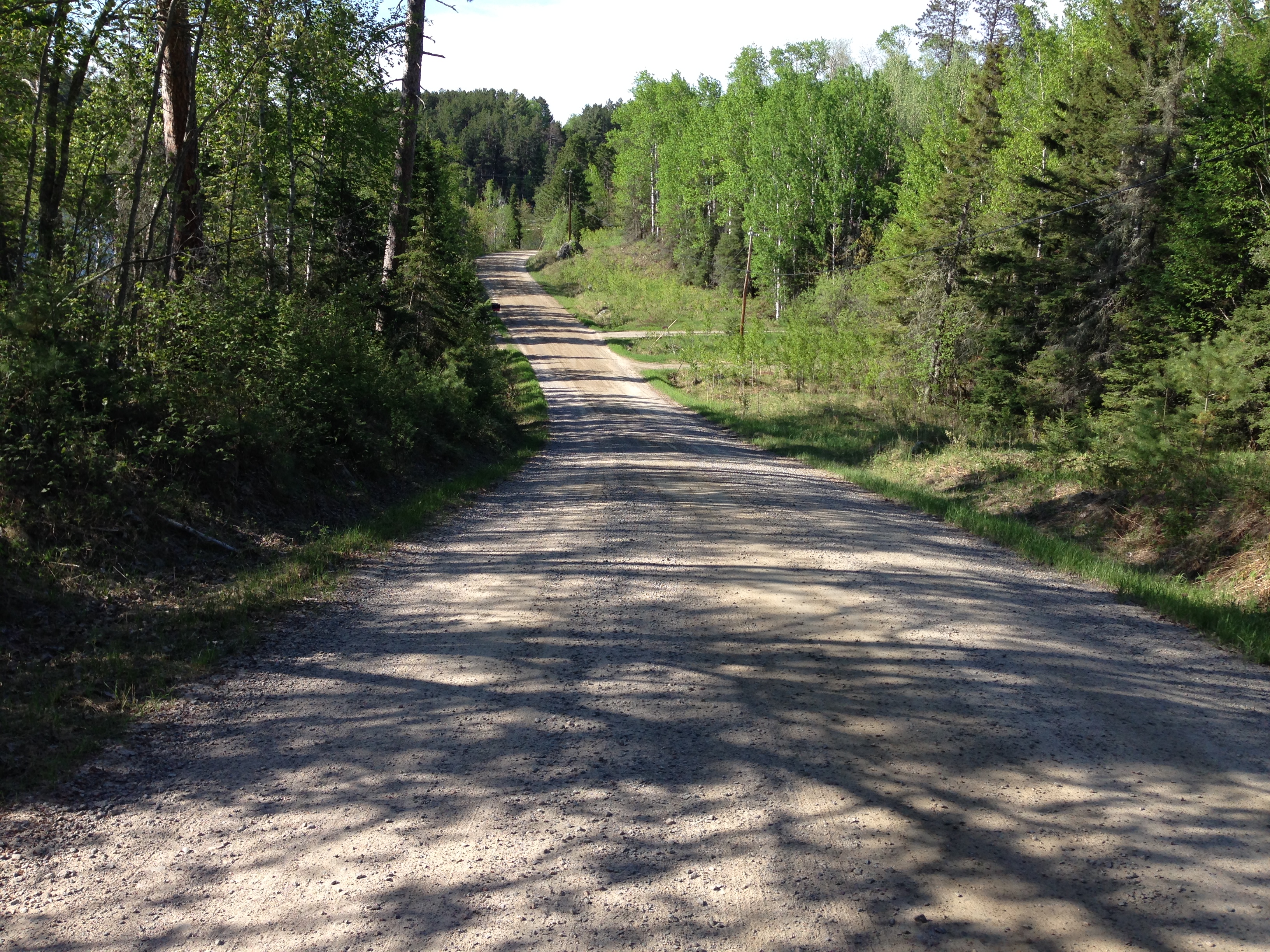
One of my favorite activities to do at Lake Vermilion actually doesn’t actually involve getting in the lake. Rather, I enjoy taking walks on the road that goes right along the lake. It is about a 6 mile hike (round trip) from the cabin I stay in to the end of the road.

IMG_0546
This is the beginning of the road.

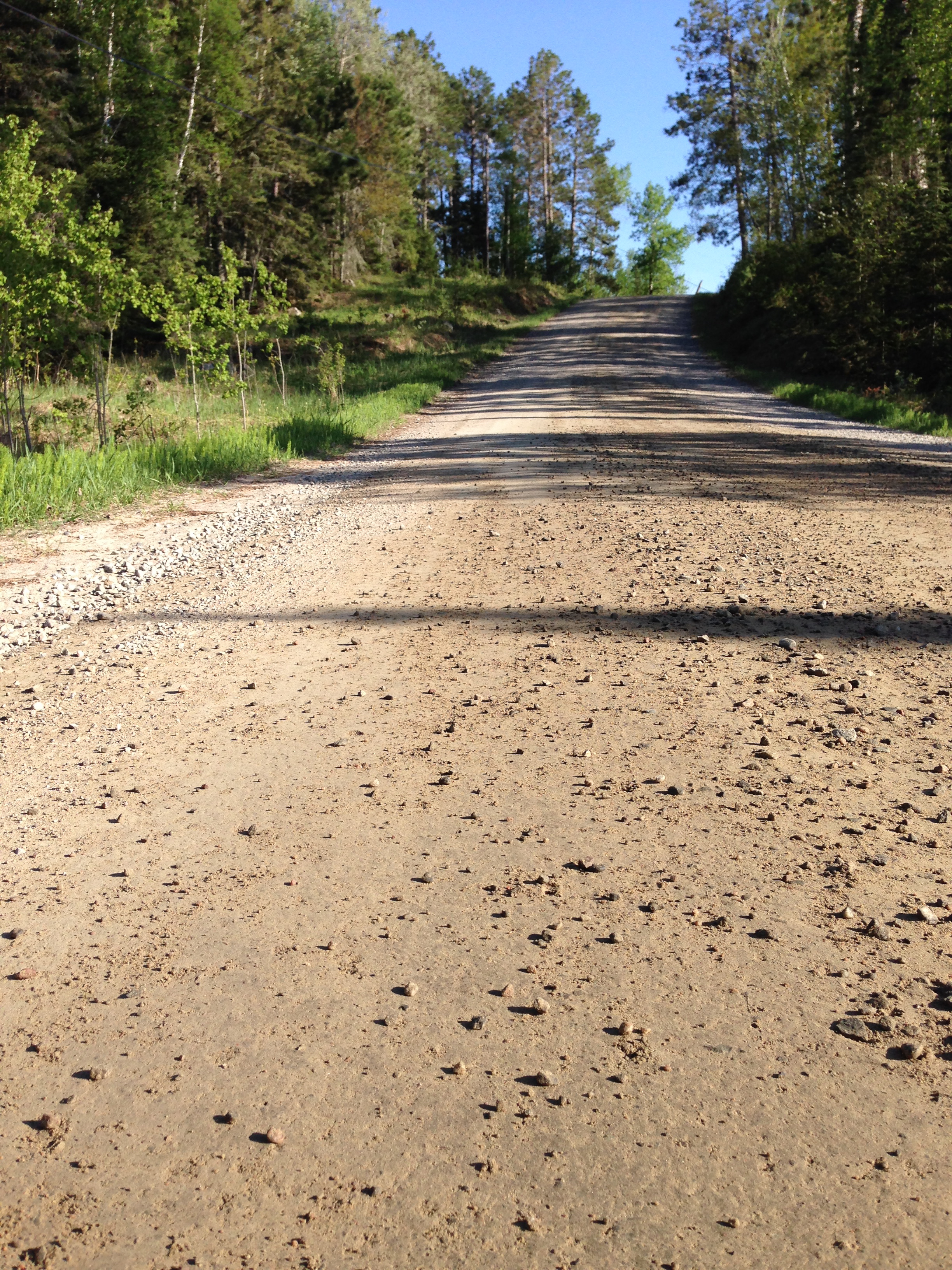
And, I kid you not, it is uphill both ways. My mom and I joke about how it is a great butt workout.

IMG_0548
A hill (I swear it is a hill…I realize it might not look like much of a hill…my phone camera and non-existent camera skills don’t do it justice!)

IMG_0552
Another hill.

IMG_0550
Another hill.

IMG_0561
Even more hills.

Occasionally, I will get it in my mind that I can run the distance, but I pretty much think I hike the hills no matter what, and really just run in between (I probably should also change the word run to jog :)). Oh, and there are beautiful lake side views to enjoy:

IMG_0554

IMG_0555

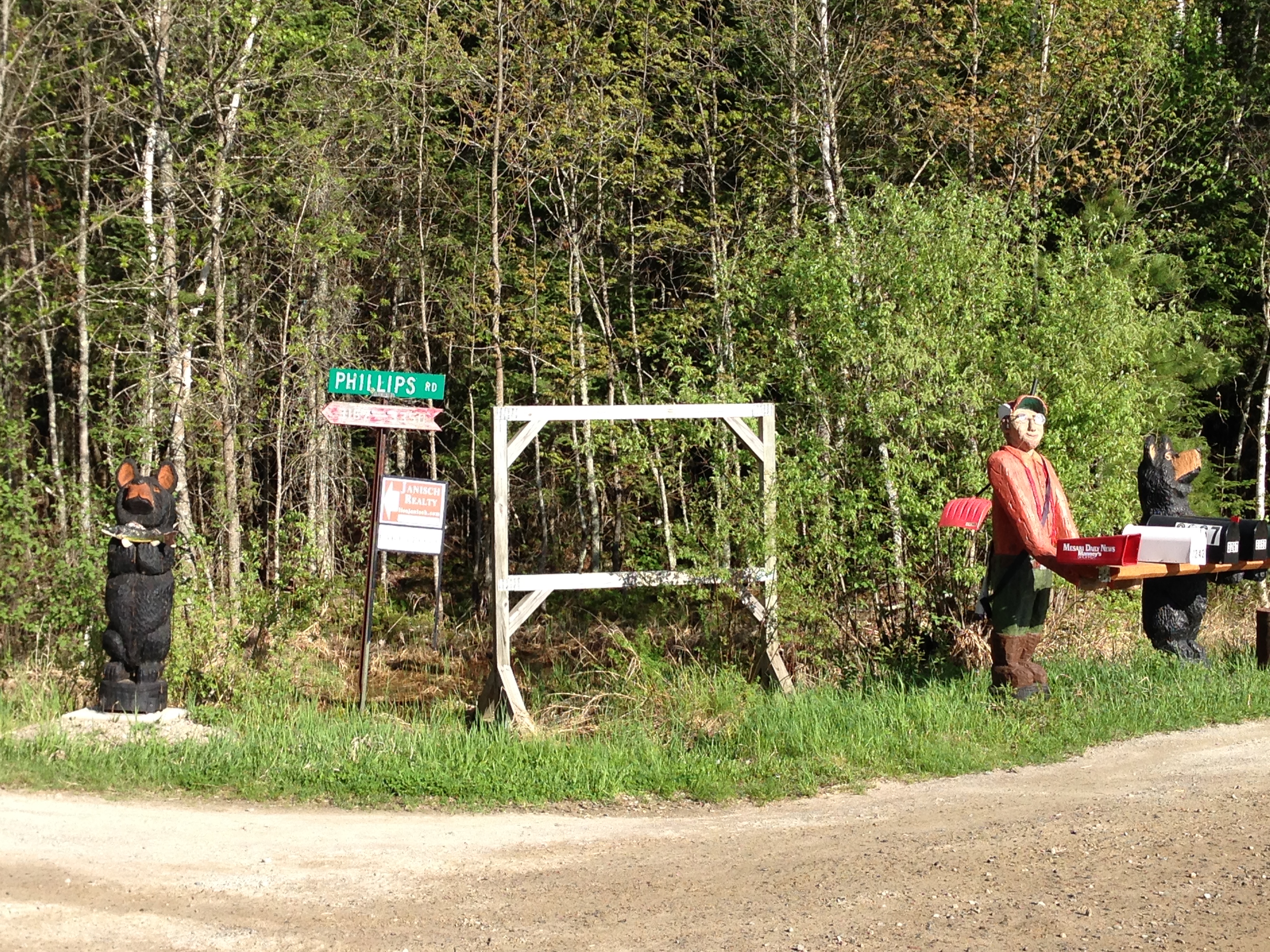
As well as humorous mailboxes:

IMG_0556

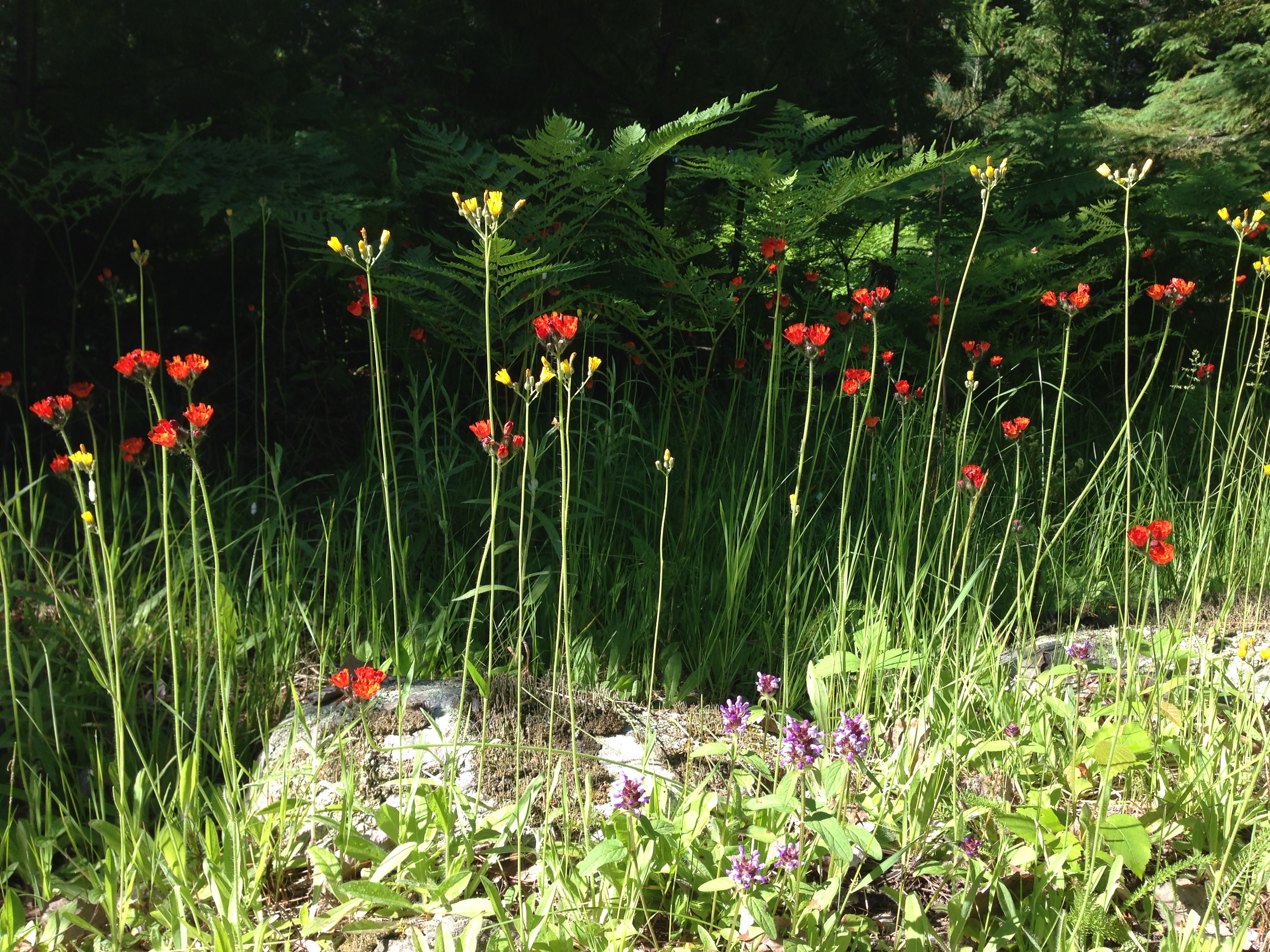
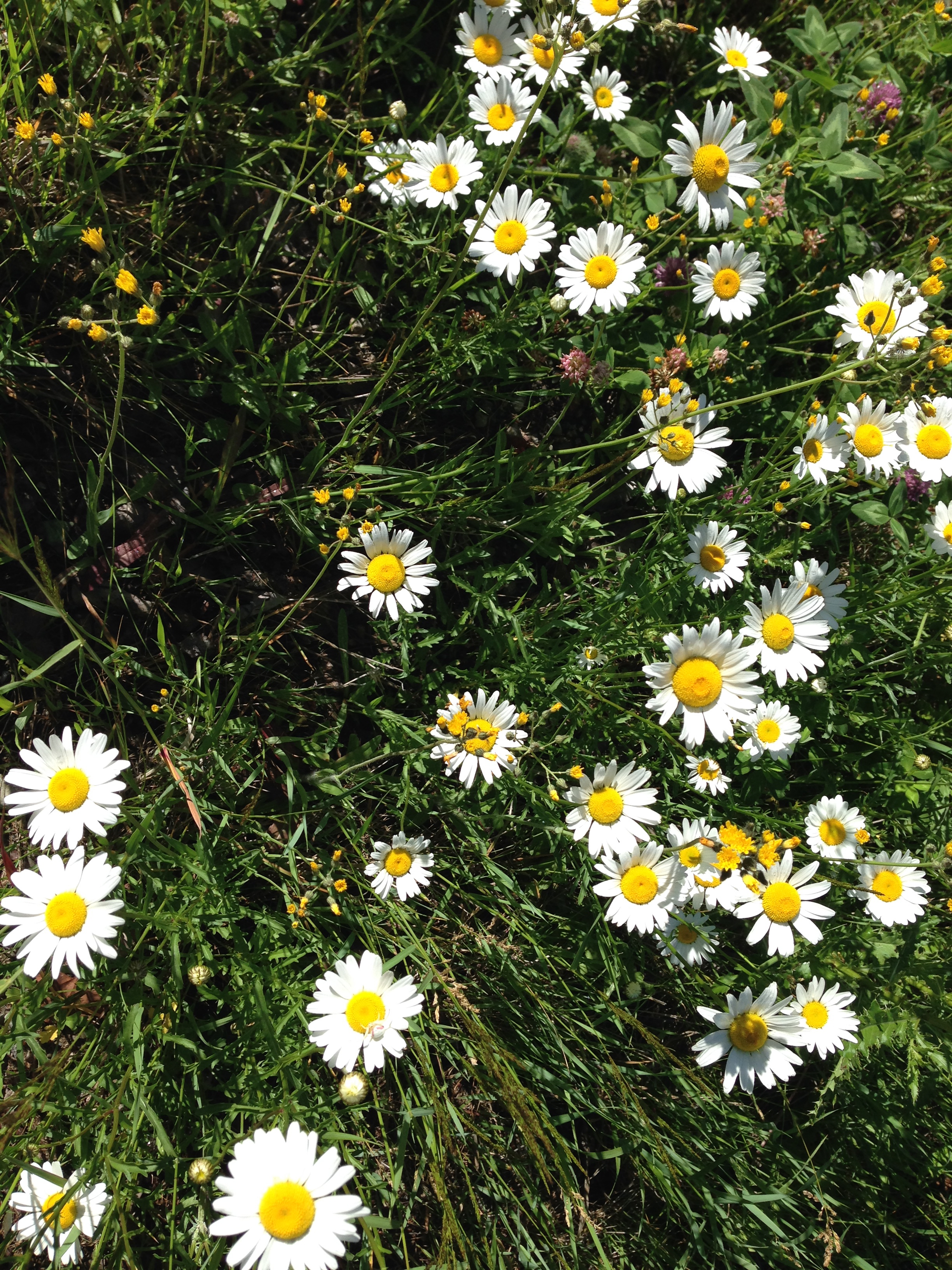
Besides the fresh air, I love looking at the forest and all of the wild flowers that grow under the trees. Some of my favorites are:

IMG_0616

IMG_0617

IMG_0618

Unfortunately, I’m not sure what any of them are called. I do know that if I was up here in later July or August, I would also find wild blueberries and raspberries. I was often told as a little girl to go pick wild berries when I said I was bored and/or there was nothing to do.

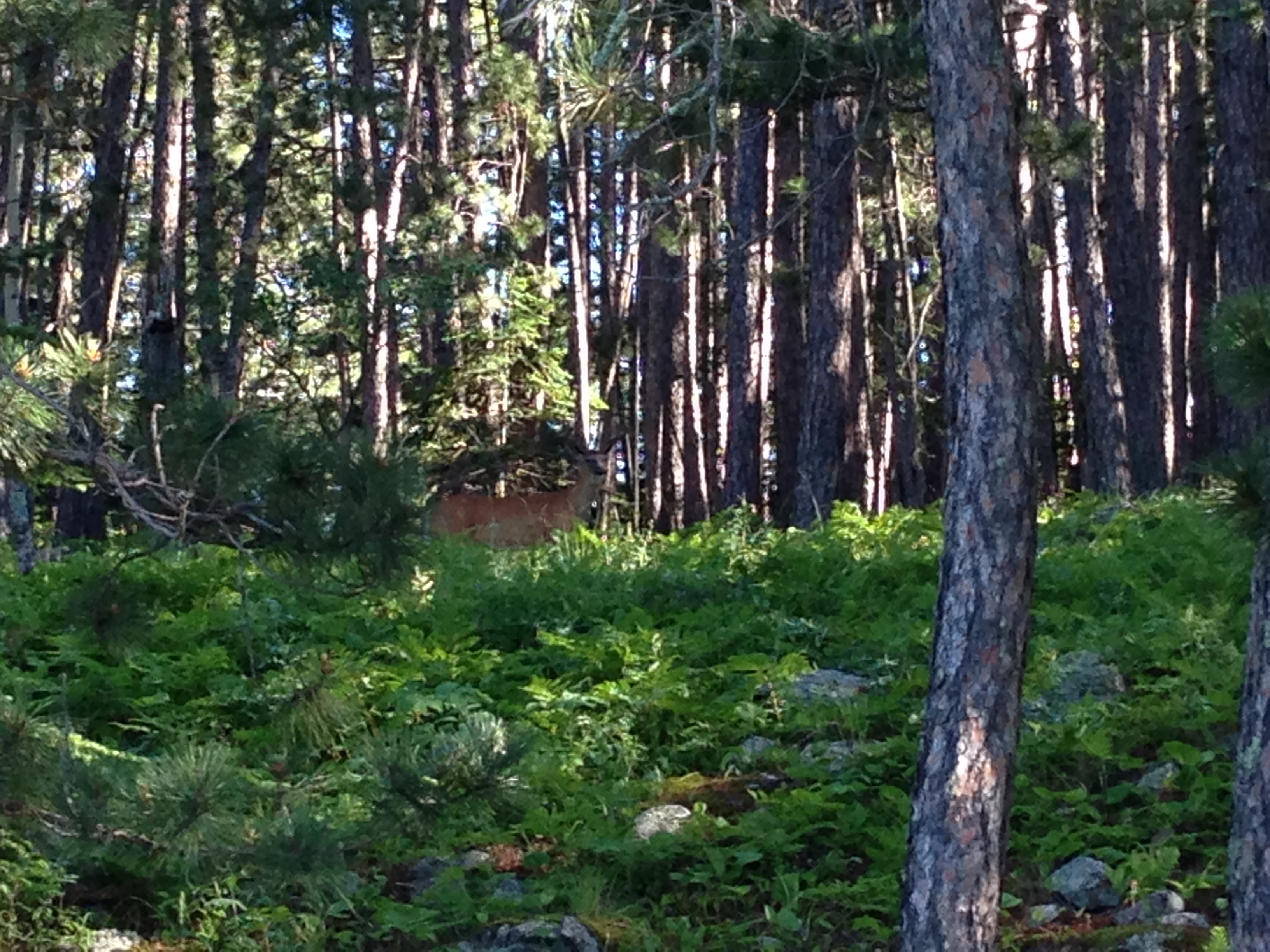
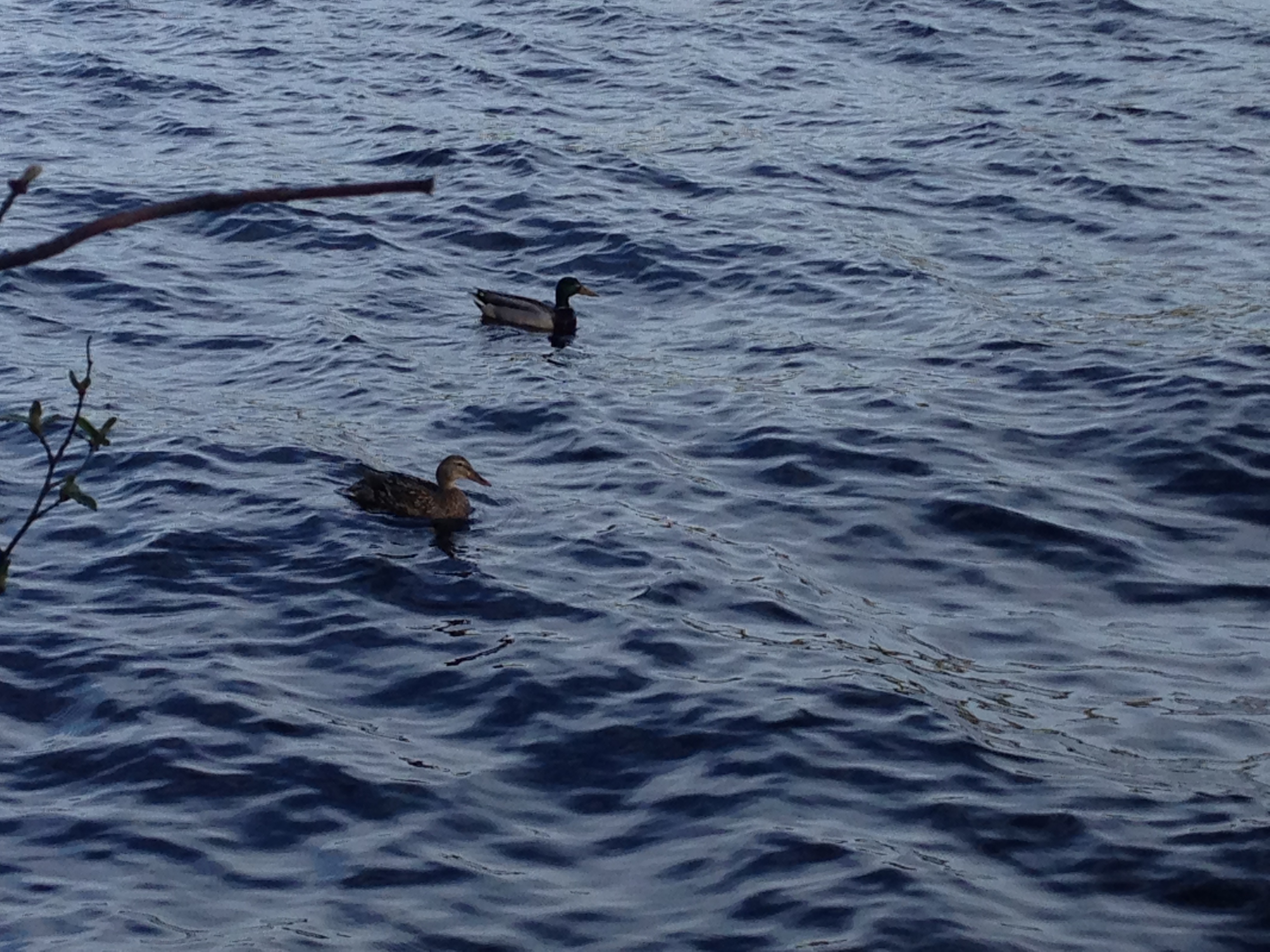
From time to time on my walks, I am also reminded that the forest is the permanent home of quite a few animals. So far this summer I’ve seen:

IMG_0615
deer (this is just one of several deer I’ve seen),

IMG_0538
ducks,

IMG_0620
a turtle (who always seems to want to be going to the other side of the road),

IMG_0560
and a fox.

I know that how I find calmness might not be the same as everyone else, and that is cool…Lake Vermilion walks wouldn’t be the same if they did. πŸ™‚